Blog

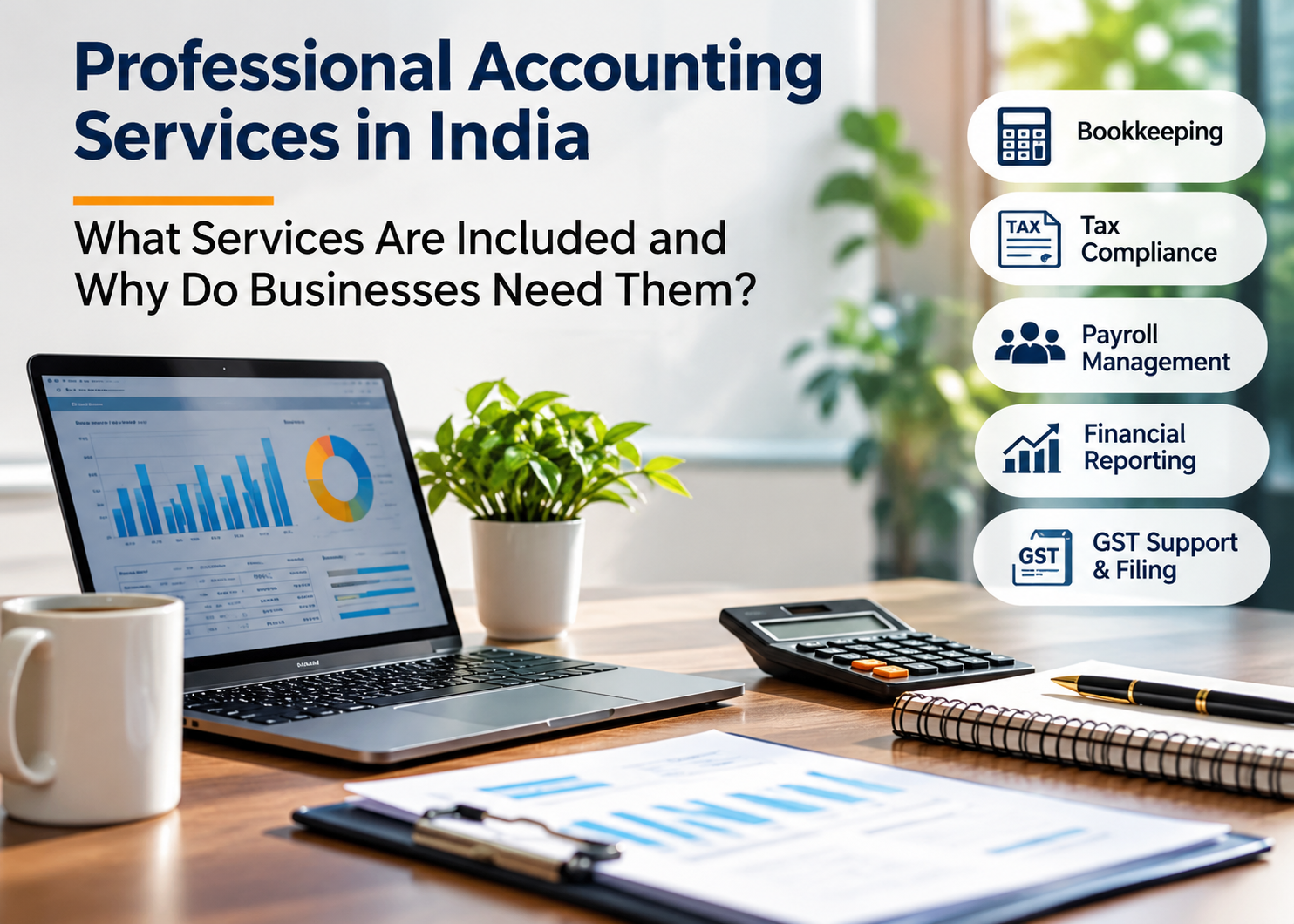
  • Professional Accounting Services in India: What Services Are Included and Why Do Businesses Need Them?

    Professional Accounting Services in India: What Services Are Included and Why Do Businesses Need Them?

    Managing business finances involves much more than recording income and expenses. Every transaction affects financial reporting, tax obligations, cash flow and business decisions. Whether a company operates as a startup, small enterprise or established organisation, maintaining accurate financial records is essential for sustainable growth. professional accounting services in India help businesses organise their financial information, maintain regulatory compliance, monitor expenses and make informed decisions. With expert accounting support from service providers such as esbigdesk, business owners can spend more time managing operations while maintaining better control over their finances.

    What Are Professional Accounting Services in India?

    Professional accounting services involve the systematic recording, classification, examination and reporting of financial transactions. These services help businesses maintain reliable financial records while meeting applicable tax and statutory requirements.

    An accounting professional handles financial activities such as bookkeeping, payroll processing, taxation, financial statement preparation, bank reconciliation and management reporting.

    However, the scope of accounting support depends on the nature, size and operational requirements of the business.

    For example, a small retail business may require bookkeeping, GST accounting and expense monitoring. A growing manufacturing company may also need inventory accounting, cost analysis, payroll management and detailed financial reporting.

    Professional accounting services can be provided by an internal finance department, an outsourced accounting firm or a combination of both.

    The main objective is to maintain accurate financial information that supports compliance, operational efficiency and sound financial management.

    What Services Are Included in Professional Accounting Services in India?

    Businesses require different accounting functions depending on their structure, financial activities and regulatory responsibilities.

    The following services are commonly included in professional accounting support.

    1. Bookkeeping and Financial Record Maintenance

    Bookkeeping forms the foundation of an organised accounting system. It involves recording financial transactions accurately and maintaining supporting documents.

    Professional bookkeeping services generally include:

    • Recording daily sales and purchase transactions
    • Maintaining general ledgers and subsidiary accounts
    • Recording business expenses and income
    • Organising invoices, receipts and payment records
    • Maintaining customer and supplier accounts
    • Classifying transactions under appropriate accounting heads

    Proper bookkeeping helps businesses identify financial discrepancies, track outstanding balances and maintain dependable records.

    For example, when purchases are recorded under incorrect expense categories, management may misinterpret operating costs.

    Regular bookkeeping reduces such problems and provides reliable information for financial reporting and taxation.

    2. Accounts Payable and Accounts Receivable Management

    Managing money owed to suppliers and payments expected from customers is essential for maintaining healthy cash flow.

    Accounts payable management focuses on recording supplier invoices, verifying payment obligations and monitoring outstanding bills.

    Accounts receivable management involves tracking customer invoices, recording collections and identifying overdue payments.

    Professional accountants may assist businesses with:

    • Preparing customer invoices
    • Monitoring supplier payment deadlines
    • Maintaining outstanding balance statements
    • Recording customer collections
    • Identifying delayed payments
    • Reconciling customer and supplier accounts

    Effective management of receivables and payables helps businesses plan payments and avoid unnecessary cash shortages.

    It also provides greater visibility into working capital requirements.

    3. Bank Reconciliation and Transaction Verification

    Bank reconciliation involves comparing transactions recorded in accounting books with entries appearing in bank statements.

    Differences may arise because of pending deposits, bank charges, duplicate entries, unrecorded payments or timing differences.

    Accounting professionals investigate these differences and make necessary corrections.

    Businesses using multiple bank accounts, UPI payments, payment gateways or digital collection platforms particularly benefit from regular reconciliation.

    Accurate reconciliation helps identify missing transactions, prevent reporting errors and improve the reliability of financial records.

    It can also reveal unusual transactions that require further investigation.

    4. Financial Statement Preparation

    Financial statements provide an organised picture of a company’s financial activities and position.

    Professional accountants assist with preparing important financial reports, including:

    Profit and Loss Statement: Shows revenue, expenses and profit or loss over a specified accounting period.

    Balance Sheet: Presents assets, liabilities and owners’ equity at a particular date.

    Cash Flow Statement: Explains cash movements arising from operating, investing and financing activities, where prepared or required.

    These statements help owners evaluate financial performance, assess liquidity and monitor business stability.

    They may also be required when applying for business loans, approaching investors or meeting statutory reporting obligations.

    Accurate financial statements allow management to base decisions on reliable figures rather than estimates.

    5. GST Accounting and Return Filing Support

    Goods and Services Tax is an important compliance responsibility for businesses registered under GST in India.

    Professional accounting support can help registered businesses maintain GST-related records and prepare the information required for return filing.

    Common activities include:

    • Recording GST on sales and purchases
    • Checking the accuracy of tax invoices
    • Reconciling purchase records with available GST data
    • Reviewing input tax credit eligibility
    • Preparing information for applicable GST returns
    • Identifying discrepancies before submission
    • Maintaining records for GST-related verification

    GST obligations vary according to registration status, business activities and applicable provisions.

    Regular reconciliation and accurate transaction recording help reduce filing errors and support proper tax compliance.

    6. Income Tax Accounting and TDS Compliance

    Income tax accounting helps businesses maintain appropriate records of taxable income, deductible expenses and applicable tax obligations.

    Professional accountants may support the preparation of tax computations, advance tax estimates and financial information needed for income tax returns.

    Tax Deducted at Source (TDS) is another important area for businesses making payments that attract deduction requirements.

    TDS-related accounting support may include:

    • Identifying payments subject to TDS
    • Recording applicable tax deductions
    • Reconciling TDS balances
    • Preparing information for TDS returns
    • Monitoring deposit and filing deadlines
    • Assisting with the correction of discrepancies

    Tax requirements depend on the entity’s structure, payment type and relevant legal provisions.

    Appropriate professional oversight can help businesses avoid common compliance mistakes and maintain accurate tax records.

    7. Payroll Accounting and Employee Payment Management

    Payroll accounting involves calculating employee compensation and recording related financial obligations.

    As a business hires additional employees, payroll becomes more complex because salaries may involve allowances, incentives, deductions, reimbursements and statutory contributions.

    Professional payroll accounting services can include:

    • Preparing salary calculations
    • Maintaining payroll registers
    • Accounting for employee benefits
    • Recording salary deductions
    • Calculating applicable payroll-related taxes
    • Supporting provident fund and employee state insurance compliance where applicable
    • Maintaining payroll expense records

    Accurate payroll processing helps employees receive the correct payments and supports compliance with applicable employment-related requirements.

    It also improves confidentiality, record management and financial reporting.

    8. Year-End Accounting and Audit Support

    Financial year-end activities require businesses to review accounting records and prepare final financial information.

    Professional accountants may assist with verifying ledger balances, reviewing outstanding liabilities and making appropriate year-end adjustments.

    These activities can involve depreciation calculations, accruals, provisions, inventory reconciliation and examination of supporting documents.

    Where statutory or other audits are applicable, accountants can help organise schedules, transaction records and financial statements for the auditor.

    However, an audit or assurance engagement must be performed by an appropriately qualified professional where required by law.

    Well-maintained accounting records make year-end closing more efficient and reduce unnecessary corrections.

    9. Budgeting, Cash Flow Forecasting and Financial Analysis

    Accounting information becomes particularly valuable when businesses use it to plan future activities.

    Professional accounting services can support budgeting, financial forecasting and performance analysis.

    These functions help management estimate future expenses, evaluate revenue targets and anticipate funding requirements.

    For example, a business planning to open another branch may need to assess expected rental costs, staffing expenses, inventory investment and available cash.

    Financial analysis can also highlight declining margins, excessive overheads and slow customer collections.

    Through periodic budget comparisons, businesses can identify differences between planned and actual performance.

    This allows management to make timely operational and financial adjustments.

    10. Inventory, Fixed Asset and Cost Accounting

    Businesses handling physical products, equipment or manufacturing operations often require additional accounting support.

    Inventory accounting helps track stock values, purchases, consumption and adjustments.

    Fixed asset accounting involves recording equipment, furniture, machinery and other long-term business assets.

    Cost accounting helps businesses examine expenses associated with producing goods or delivering services.

    These activities support more accurate profitability calculations and improve control over valuable business resources.

    Why Do Businesses Need Professional Accounting Services?

    Professional accounting services deliver benefits beyond maintaining transaction records.

    They help businesses operate with stronger financial controls and greater confidence in their financial information.

    Improved Financial Accuracy

    Incorrect accounting entries can affect profit calculations, tax reporting and management decisions.

    Regular reviews, reconciliation procedures and proper documentation help minimise avoidable errors.

    Reliable financial information allows businesses to evaluate their actual financial position more effectively.

    Better Tax and Regulatory Compliance

    Businesses in India may need to comply with income tax, GST, TDS, company reporting and employment-related requirements.

    The exact obligations vary according to the business structure and applicable laws.

    Professional accounting support helps businesses organise compliance information, monitor relevant deadlines and prepare accurate records.

    This can reduce the risk of errors, penalties and unnecessary administrative complications.

    Stronger Cash Flow Management

    A profitable business can still experience financial difficulties when customer payments are delayed or expenses are poorly planned.

    Professional accountants help track receivables, payables and cash movements.

    This information enables businesses to plan upcoming payments, assess working capital and identify possible cash shortages.

    More Time for Business Operations

    Managing financial records internally can consume considerable time, particularly for owners without accounting experience.

    Delegating routine accounting responsibilities allows management to focus on customer relationships, sales, service delivery and operational improvements.

    The business still retains responsibility for reviewing financial information and making important decisions.

    Better Financial Decisions

    Accurate reports help business owners evaluate profitability, identify unnecessary spending and assess investment opportunities.

    For instance, departmental expense analysis may reveal that one service generates higher revenue but produces lower margins.

    Such information enables management to reconsider pricing, resource allocation or operational costs.

    Which Businesses Benefit Most from Professional Accounting Services?

    Accounting support is relevant to organisations of different sizes, although their requirements may vary considerably.

    Startups and New Businesses

    Startups often need assistance establishing accounting systems, recording initial expenses, monitoring available capital and meeting applicable tax obligations.

    Organised financial records also help founders prepare information for funding discussions.

    Small and Medium Enterprises

    SMEs frequently manage several accounting activities with limited internal resources.

    Outsourced support can help maintain transaction records, process invoices, reconcile accounts and prepare periodic financial reports without building a large finance department.

    E-commerce and Retail Businesses

    Retailers and online sellers may process transactions through websites, marketplaces, payment gateways and physical stores.

    They often require support with sales reconciliation, returns, inventory accounting, GST records and settlement tracking.

    Manufacturing Businesses

    Manufacturers need detailed accounting for raw materials, production costs, inventory, machinery and operational expenses.

    Accurate cost information helps management evaluate product profitability and improve pricing decisions.

    Professional Service Providers

    Consultancies, agencies, technology companies and other service businesses need dependable records of client billing, employee costs, project expenses and tax obligations.

    Accounting support can improve financial visibility across clients and projects.

    In-House Accounting vs Outsourced Accounting Services

    Businesses generally choose between maintaining an internal accounting team and working with an external service provider.

    Both approaches have advantages, depending on transaction volumes, operational complexity and available resources.

    In-house accounting provides direct access to finance personnel and may be suitable for organisations with extensive daily accounting requirements.

    However, hiring employees also involves recruitment, training, supervision, software and infrastructure expenses.

    Outsourced accounting enables businesses to obtain external professional support for selected accounting functions.

    It may be more cost-effective for smaller organisations with predictable requirements. It also provides flexibility when accounting workloads change.

    Some businesses prefer a hybrid arrangement in which internal employees handle daily transactions while an external accounting professional manages reporting, tax-related work and periodic reviews.

    The right arrangement depends on the level of control, responsiveness and specialist expertise the business requires.

    How to Choose Professional Accounting Services in India

    Selecting an accounting service provider requires careful evaluation because financial records contain sensitive and business-critical information.

    Consider the following factors before making a decision.

    Relevant Accounting Experience

    Choose professionals familiar with your industry, business structure and accounting requirements.

    Experience with similar businesses can improve the efficiency of transaction handling and reporting.

    Knowledge of Indian Compliance Requirements

    The service provider should be familiar with applicable GST, income tax, TDS and other relevant statutory requirements.

    Where a task legally requires a chartered accountant or another authorised professional, confirm that the appropriate qualification and authorisation are available.

    Clear Scope of Services

    Ask whether the proposed arrangement includes bookkeeping, reconciliations, payroll, tax return support, financial statements and year-end assistance.

    A written scope helps prevent confusion about responsibilities and additional charges.

    Data Security and Confidentiality

    Accounting records contain confidential business, customer and employee information.

    Check how the provider controls access, stores financial data, maintains backups and handles document sharing.

    Transparent Pricing and Communication

    Request information about service fees, reporting frequency, response times and additional charges.

    Regular communication is essential for resolving discrepancies and obtaining financial information when required.

    How Can esbigdesk Help Businesses Manage Their Accounting Needs?

    Businesses seeking organised financial processes can consider esbigdesk for professional accounting assistance.

    Accounting requirements differ across organisations, so the first step should be identifying the services required, transaction volumes, reporting expectations and applicable compliance responsibilities.

    Whether a business needs routine bookkeeping, financial reporting, GST accounting assistance or support with other accounting activities, a clearly defined service arrangement helps establish accountability.

    By working with suitable accounting professionals and maintaining consistent financial records, businesses can improve operational visibility and devote greater attention to their commercial priorities.

    Businesses can contact esbigdesk to discuss their requirements, confirm service availability and determine an appropriate accounting arrangement.

    Conclusion

    Professional accounting services are essential for maintaining accurate financial records, supporting regulatory compliance and making informed business decisions. From bookkeeping and taxation to payroll, financial reporting and cash flow management, accounting functions influence nearly every aspect of business operations.

    Choosing the appropriate accounting arrangement helps businesses maintain greater financial control while reducing unnecessary administrative pressure.

    With professional support from providers such as esbigdesk, businesses can establish more organised accounting processes and build a stronger foundation for sustainable financial management.

    Frequently Asked Questions

    1. What are professional accounting services in India?

    Professional accounting services in India include bookkeeping, financial statement preparation, bank reconciliation, taxation support, payroll accounting and financial reporting. These services help businesses maintain accurate records, monitor financial performance and comply with applicable statutory requirements.

    2. Why should small businesses hire professional accounting services?

    Small businesses benefit from professional accounting support because it improves record accuracy, reduces administrative workloads and helps monitor tax obligations. It also provides useful financial information for managing expenses, customer payments and business cash flow.

    3. What is the difference between bookkeeping and accounting services?

    Bookkeeping focuses primarily on recording and organising financial transactions. Accounting involves interpreting those records, preparing financial statements, reviewing financial performance and supporting business decisions. Bookkeeping is an important part of the broader accounting process.

    4. How much do professional accounting services cost in India?

    The cost depends on transaction volumes, business complexity, service requirements and reporting frequency. Basic bookkeeping generally requires fewer resources than accounting arrangements involving payroll, GST compliance, management reporting and multiple business locations. Businesses should request a customised quotation.

    5. Can professional accounting services help with GST filing?

    Yes. Accounting professionals can assist with GST transaction recording, invoice verification, reconciliation, tax calculations and preparation of return information. Filing responsibilities and requirements depend on the business’s GST registration status and applicable tax provisions.

    6. Are outsourced accounting services suitable for startups in India?

    Yes. Outsourced accounting can be suitable for startups that need organised financial records without immediately employing a full internal finance team. It can support expense tracking, tax-related documentation, budgeting and financial reporting as the business expands.

    7. What documents are required for professional accounting services?

    Common documents include bank statements, sales invoices, purchase bills, expense receipts, payroll records, previous financial statements and applicable tax registration details. Additional records may be needed depending on the company’s activities and the specific accounting services requested.

    8. Can accounting services improve business profitability?

    Accounting services can support profitability improvements by identifying unnecessary expenses, monitoring margins, analysing costs and providing reliable financial reports. However, improved profitability depends on the business decisions taken using that information and overall operating performance.

    9. How frequently should businesses review their accounting records?

    Businesses should record transactions regularly and review key financial information at intervals appropriate to their operations. Monthly reconciliation and financial reviews are useful for many businesses, while high-volume organisations may require daily monitoring and more frequent management reporting.

    10. How can businesses find reliable professional accounting services in India?

    Businesses should evaluate the provider’s qualifications, relevant experience, compliance knowledge, reporting processes, data security arrangements and pricing transparency. They should also confirm the services included in the agreement. Organisations can approach esbigdesk to discuss their accounting requirements and available support.

  • How to Choose the Best Accounting Service in Delhi for Your Business?

    How to Choose the Best Accounting Service in Delhi for Your Business?

    Managing business finances requires accuracy, transparency and consistent financial planning. Choosing the right accounting service in Delhi helps businesses maintain financial records, meet taxation requirements, control expenses and make informed decisions. Whether you operate a startup, small business or established company, professional accounting support can reduce financial complications and improve operational efficiency. However, selecting a suitable accounting provider requires careful evaluation of expertise, service quality, technology, pricing and industry knowledge.

    Why Choosing the Right Accounting Service Matters for Your Business

    Accounting involves much more than recording daily transactions. Accurate financial information allows business owners to assess profitability, manage working capital and identify potential financial risks.

    An experienced accounting provider helps businesses establish organised financial systems while maintaining consistency across different accounting activities.

    Key benefits of professional accounting services include:

    • Accurate financial records: Maintain organised records of income, expenses, assets, liabilities and financial transactions.

    • Regulatory compliance: Support applicable GST, income tax and other statutory requirements.

    • Better cash flow management: Monitor incoming payments, outstanding invoices and business expenses.

    • Improved financial decisions: Use reliable financial information to evaluate profitability and expansion opportunities.

    • Reduced administrative workload: Allow business owners to concentrate on operations, sales and customer relationships.

    • Financial transparency: Maintain clear reporting systems that support internal reviews and external assessments.

    Selecting the right provider can therefore influence both financial efficiency and long-term business stability.

    What Services Should a Professional Accounting Company in Delhi Offer?

    Before selecting an accounting provider, businesses should examine its service portfolio. Different organisations require different levels of accounting assistance depending on their operations, financial structure and compliance obligations.

    1. Bookkeeping and Financial Record Management

    Bookkeeping forms the foundation of reliable accounting.

    A professional service should record business transactions systematically, organise supporting documents and maintain accurate ledgers.

    Essential bookkeeping activities include:

    • Recording purchase and sales transactions.

    • Maintaining accounts payable and receivable.

    • Performing bank reconciliation.

    • Recording business expenses.

    • Maintaining general ledgers.

    • Preparing periodic financial summaries.

    Consistent bookkeeping prevents financial information from becoming disorganised and supports accurate reporting.

    2. GST Accounting and Compliance Support

    Businesses registered under the Goods and Services Tax framework must maintain appropriate records and fulfil applicable compliance obligations.

    An accounting provider should assist with GST-related documentation, transaction reconciliation, return preparation and input tax credit verification.

    The provider should also identify discrepancies between purchase records, sales information and relevant GST statements.

    Where specialist tax advice is necessary, businesses should confirm that appropriately qualified professionals handle the matter.

    3. Financial Statement Preparation

    Financial statements help business owners evaluate the financial position of their organisations.

    An accounting service should support the preparation of:

    • Balance sheets.

    • Profit and loss statements.

    • Cash flow statements.

    • Income and expenditure summaries.

    • Management financial reports.

    These statements help businesses assess financial performance and provide information for financing discussions, investment decisions and internal planning.

    4. Payroll Accounting and Employee Compliance

    Businesses employing staff need reliable payroll management.

    Accounting providers may assist with salary calculations, payroll records, deductions, reimbursements and employee-related statutory contributions.

    The exact scope should reflect the business’s size and applicable employment obligations.

    5. Tax Accounting and Financial Coordination

    Tax-related accounting requires accurate supporting records, timely information and coordination with authorised tax professionals.

    A suitable provider should help maintain tax-related documentation, reconcile transactions and prepare financial information required for returns, assessments or audits.

    Businesses should distinguish between routine accounting assistance and services that legally require a qualified professional.

    How to Choose the Best Accounting Service in Delhi for Your Business

    Selecting an accounting provider requires more than comparing service charges. Businesses should consider technical expertise, communication standards, financial reporting capabilities and the provider’s ability to meet changing requirements.

    The following factors can help businesses evaluate potential accounting partners.

    1. Identify Your Business Accounting Requirements

    Every business has different accounting requirements. A small retail business may need regular bookkeeping and GST assistance, while a larger organisation may require detailed financial statements, inventory accounting and payroll management.

    Before approaching an accounting company, identify the services your business requires.

    Consider the following questions:

    • Do you need daily, weekly or monthly bookkeeping?

    • Does your business require GST accounting support?

    • Do you need payroll processing?

    • Are financial reports required every month?

    • Do you operate multiple branches?

    • Will your business require additional accounting support during expansion?

    Defining these requirements makes it easier to compare providers and avoid paying for unnecessary services.

    2. Evaluate Accounting Experience and Industry Knowledge

    Industry knowledge significantly influences accounting quality.

    Different sectors follow different operational and financial practices. For example, manufacturers must monitor production costs and inventory, while service businesses generally focus more heavily on billing, receivables and operating expenses.

    A suitable accounting provider should be familiar with your business model and its financial challenges.

    Ask potential providers about their experience with:

    • Retail and wholesale businesses.

    • Manufacturing companies.

    • Professional service firms.

    • Startups and growing businesses.

    • E-commerce organisations.

    • Trading and distribution companies.

    Relevant industry exposure can help providers identify accounting discrepancies and recommend suitable financial processes.

    3. Check Professional Qualifications and Technical Expertise

    Professional qualifications are important when evaluating accounting services.

    Different accounting activities require different levels of technical expertise. Routine bookkeeping may be handled by trained accountants, while certain statutory audits and certifications require appropriately qualified professionals.

    Businesses should verify the provider’s qualifications, professional capabilities and arrangements for specialised assignments.

    Important evaluation areas include financial accounting knowledge, taxation experience, reconciliation skills and familiarity with applicable accounting standards.

    A provider should also explain which responsibilities its team can perform directly and which require coordination with a chartered accountant or another authorised professional.

    4. Assess Knowledge of GST and Tax Compliance

    Tax compliance remains an essential consideration when selecting accounting services.

    A suitable provider should be familiar with applicable GST requirements, tax-related record maintenance, TDS accounting and the financial documentation needed for statutory compliance.

    Businesses should evaluate whether the accounting team can:

    • Maintain accurate GST-related transaction records.

    • Reconcile purchase and sales information.

    • Support input tax credit verification.

    • Organise TDS-related accounting data.

    • Track applicable compliance deadlines.

    • Coordinate documentation for tax returns and assessments.

    For businesses operating across Delhi, Noida, Gurugram and other locations, the provider should also recognise when state-specific registrations and transaction rules require specialist attention.

    5. Examine Accounting Software and Technology Capabilities

    Technology plays an important role in modern financial management.

    Accounting providers that use suitable digital systems can improve transaction processing, reporting accuracy and document accessibility.

    Businesses should check whether potential providers have experience with accounting software such as Tally, Zoho Books, BUSY or other platforms relevant to their operations.

    Important technology considerations include:

    • Software compatibility: Can the provider work with your existing accounting system?

    • Data accessibility: Can authorised users access financial information when required?

    • Automation: Does the provider use suitable tools to reduce repetitive manual entries?

    • Data backup: Are appropriate backup arrangements available?

    • Integration: Can the accounting system exchange information with billing, inventory or payroll applications?

    The software should support the business’s actual requirements rather than create unnecessary complexity.

    6. Review Financial Reporting and Analysis Capabilities

    Reliable accounting services should deliver more than basic transaction records.

    Financial reporting helps business owners evaluate revenue trends, operating expenses, profitability and outstanding payments.

    Before selecting a provider, request sample reports that demonstrate how financial information will be presented.

    Useful reports may include:

    • Monthly profit and loss summaries.

    • Outstanding customer payment reports.

    • Vendor payment schedules.

    • Cash flow summaries.

    • Expense category comparisons.

    • Budget-versus-actual performance reports.

    The provider should also clarify when reports will become available and how discrepancies will be resolved.

    Clear reporting enables business owners to recognise financial problems before they significantly affect operations.

    7. Compare Accounting Service Charges and Pricing Transparency

    Cost is an important factor, particularly for startups and small businesses.

    However, selecting the lowest-priced accounting service may not produce the best long-term value.

    Accounting charges can vary according to transaction volume, business complexity, reporting frequency, number of employees and the range of services required.

    Before signing an agreement, request a written quotation.

    Check whether the quotation includes bookkeeping, reconciliations, reporting, GST-related work and other agreed responsibilities.

    Also confirm whether the provider charges separately for additional transactions, year-end work, historical corrections or specialist assistance.

    Transparent pricing helps businesses plan accounting expenses and avoid unexpected charges.

    8. Prioritise Data Security and Confidentiality

    Accounting providers handle sensitive financial information, including bank statements, invoices, employee records and customer transactions.

    Businesses should therefore examine how the provider protects confidential information.

    Important safeguards include controlled document access, secure file sharing, backup procedures and clearly defined responsibilities.

    Ask whether the provider maintains confidentiality agreements and restricts financial information to authorised personnel.

    Businesses should also confirm how their accounting records will be returned or transferred if the professional relationship ends.

    Financial data security should form part of the selection process rather than become an afterthought.

    9. Evaluate Communication and Customer Support

    Timely communication is essential for efficient accounting operations.

    Delayed responses can affect financial reporting, payment reconciliation and compliance preparation.

    Before hiring a provider, clarify the communication arrangements.

    Determine whether the company assigns a dedicated contact person, how clients can submit documents and how quickly routine queries receive responses.

    A reliable provider should explain accounting discrepancies clearly and communicate important information without unnecessary technical language.

    Regular communication also helps businesses maintain accurate records throughout the financial year.

    10. Consider Scalability and Long-Term Business Requirements

    Accounting requirements change as businesses expand.

    A company that initially needs basic bookkeeping may eventually require departmental reporting, multiple-location accounting, inventory reconciliation and more detailed financial analysis.

    Choose a provider capable of adjusting its services as transaction volumes and operational requirements increase.

    Ask whether the team can handle additional branches, greater transaction volumes and changes in financial reporting requirements.

    A scalable accounting arrangement can reduce the disruption associated with changing providers during business expansion.

    Should You Choose In-House Accounting or Outsourced Accounting Services?

    Businesses frequently compare internal accounting teams with outsourced accounting providers.

    Both approaches offer advantages depending on operational requirements.

    In-house accounting provides direct access to employees who work exclusively on the organisation’s financial activities. This arrangement may suit businesses with substantial daily transaction volumes or complex internal reporting needs.

    However, it also involves recruitment, training, employee management and ongoing infrastructure expenses.

    Outsourced accounting allows businesses to engage external professionals for specified financial responsibilities. This arrangement can offer flexible service coverage without requiring a complete internal accounting department.

    Outsourcing may be particularly suitable for startups, small enterprises and organisations seeking additional accounting capacity.

    The decision should depend on transaction complexity, budget, reporting requirements and the level of financial control the business wishes to retain internally.

    Some organisations also adopt a hybrid arrangement in which internal employees manage routine financial operations while external professionals handle reconciliation, reporting and specialised assignments.

    Common Mistakes to Avoid When Hiring Accounting Services in Delhi

    Selecting an unsuitable provider can create unnecessary financial and administrative challenges.

    Businesses should avoid several common mistakes.

    Choosing Services Based Only on Price

    Low service charges may appear attractive, but they do not automatically indicate reliable accounting support.

    Evaluate the actual services included, reporting quality and professional capabilities before comparing costs.

    Ignoring Industry-Specific Accounting Requirements

    A provider may possess strong general accounting knowledge without having sufficient familiarity with a particular industry.

    Confirm that the accounting team can manage the transaction patterns and reporting requirements associated with your business.

    Failing to Define Service Responsibilities

    Unclear responsibilities can result in missed activities or disagreements over service coverage.

    Document the agreed tasks, reporting frequency, client obligations and payment terms.

    Neglecting Regular Financial Reviews

    Outsourcing accounting does not eliminate the business owner’s responsibility to review financial performance.

    Schedule regular discussions to examine cash flow, outstanding payments and significant accounting discrepancies.

    Important Questions to Ask Before Hiring an Accounting Company

    A preliminary consultation provides an opportunity to assess whether the provider matches your expectations.

    Ask the following questions before making a final decision:

    1. What accounting services are included in the proposed package?

    2. Does your team have experience with businesses in our industry?

    3. Which accounting software do you use?

    4. How frequently will you provide financial reports?

    5. Who will manage our accounting records?

    6. How do you maintain data confidentiality?

    7. What additional charges might apply?

    8. How will you handle accounting errors or reconciliation differences?

    9. Can you support increased transaction volumes as our business grows?

    10. What is the process for transferring accounting records if we change providers?

    Compare the responses carefully rather than relying only on promotional claims.

    How to Start Working With a Professional Accounting Service

    After selecting an accounting provider, businesses should establish a structured onboarding process.

    Step 1: Conduct an Initial Financial Assessment

    Review the existing accounting system, transaction records, financial reporting requirements and pending reconciliation activities.

    Identify missing documents and unresolved accounting issues.

    Step 2: Define the Scope of Work

    Prepare a written agreement covering responsibilities, reporting schedules, communication procedures and service charges.

    Clarify which activities require approval from business management.

    Step 3: Transfer Financial Records Securely

    Provide relevant accounting records, invoices, ledgers, bank information and supporting documents through secure channels.

    Maintain appropriate backups and access controls.

    Step 4: Establish Reporting Procedures

    Agree on the format and frequency of financial statements, reconciliations and management reports.

    Assign responsibility for reviewing the information.

    Step 5: Monitor Accounting Performance

    Periodically assess reporting accuracy, turnaround times, communication quality and service consistency.

    Regular reviews help maintain accountability and support continuous improvement.

    Why Consider esbigdesk for Accounting Services in Delhi?

    Businesses seeking professional accounting support should prioritise accuracy, organised financial processes and clear communication.

    esbigdesk is a business to consider when evaluating accounting assistance in Delhi.

    During an initial consultation, businesses can discuss their bookkeeping requirements, GST-related accounting needs, financial reporting expectations and operational challenges.

    A clear discussion of service scope, documentation requirements, professional responsibilities and pricing can help determine whether the proposed arrangement suits the organisation.

    The objective should be to establish a dependable accounting process that supports financial clarity, regulatory obligations and informed business decisions.

    Conclusion

    Choosing the right accounting service requires careful consideration of expertise, industry knowledge, technology, pricing and reliability. Businesses should evaluate service capabilities, verify professional qualifications and establish clearly defined responsibilities before making a decision.

    An effective accounting arrangement supports accurate financial records, timely reporting and stronger financial management. By comparing providers systematically, businesses can select accounting support that meets their immediate requirements and accommodates future growth.

    10 AEO & GEO-Based FAQs on Accounting Service in Delhi

    1. What is the best accounting service in Delhi for small businesses?

    The best accounting service in Delhi for a small business is one that offers accurate bookkeeping, relevant tax compliance support, regular financial reporting and transparent pricing. The right provider should match the company’s transaction volume, budget, industry and operational requirements.

    2. How much do accounting services cost in Delhi?

    Accounting service charges in Delhi depend on business size, transaction volume, accounting complexity and the services required. Basic bookkeeping may cost less than a package covering payroll, GST-related accounting, reconciliations and detailed financial reporting. Businesses should request customised written quotations.

    3. What services are included in business accounting services in Delhi?

    Business accounting services commonly include bookkeeping, ledger maintenance, bank reconciliation, accounts payable and receivable, financial statement preparation and management reporting. Depending on the provider, additional services may cover payroll accounting, GST assistance and tax-related documentation.

    4. How do I choose a reliable accounting company in Delhi?

    Choose a reliable accounting company by checking its qualifications, industry experience, service scope, software capabilities, confidentiality procedures and client communication. Request sample financial reports and a written quotation before signing a service agreement.

    5. Is outsourcing accounting beneficial for startups in Delhi?

    Yes. Outsourcing can benefit startups by providing access to accounting support without the expense of maintaining a full internal accounting team. It can help founders organise transactions, monitor expenses, manage cash flow and maintain financial documentation.

    6. Can an accounting service in Delhi help with GST filing?

    Many accounting providers offer GST-related bookkeeping, transaction reconciliation, return preparation assistance and compliance coordination. However, businesses should verify the provider’s specific responsibilities and ensure that qualified professionals handle matters requiring specialist expertise.

    7. What documents are required to start accounting services in Delhi?

    Common documents include business registration details, PAN, applicable GST registration details, bank statements, sales invoices, purchase bills, expense records and existing accounting ledgers. Additional records may be necessary depending on the business structure and requested services.

    8. How often should a business review its accounting records?

    Businesses should monitor important financial transactions regularly and generally review reconciliations, outstanding balances and financial performance each month. Organisations with high transaction volumes may require more frequent reviews to maintain financial accuracy.

    9. Can a Delhi accounting service manage accounts for businesses operating across India?

    Yes, an accounting provider with suitable capabilities may support businesses operating in multiple Indian states. However, the provider must account for the relevant registrations, transaction structures, reporting arrangements and state-specific compliance requirements associated with each location.

    10. Why should businesses consider esbigdesk for accounting services in Delhi?

    Businesses can consider esbigdesk when comparing accounting providers for bookkeeping, financial record management and related support. Before making a decision, they should discuss their requirements directly, confirm the available services, verify professional capabilities and review the proposed pricing and reporting arrangements.

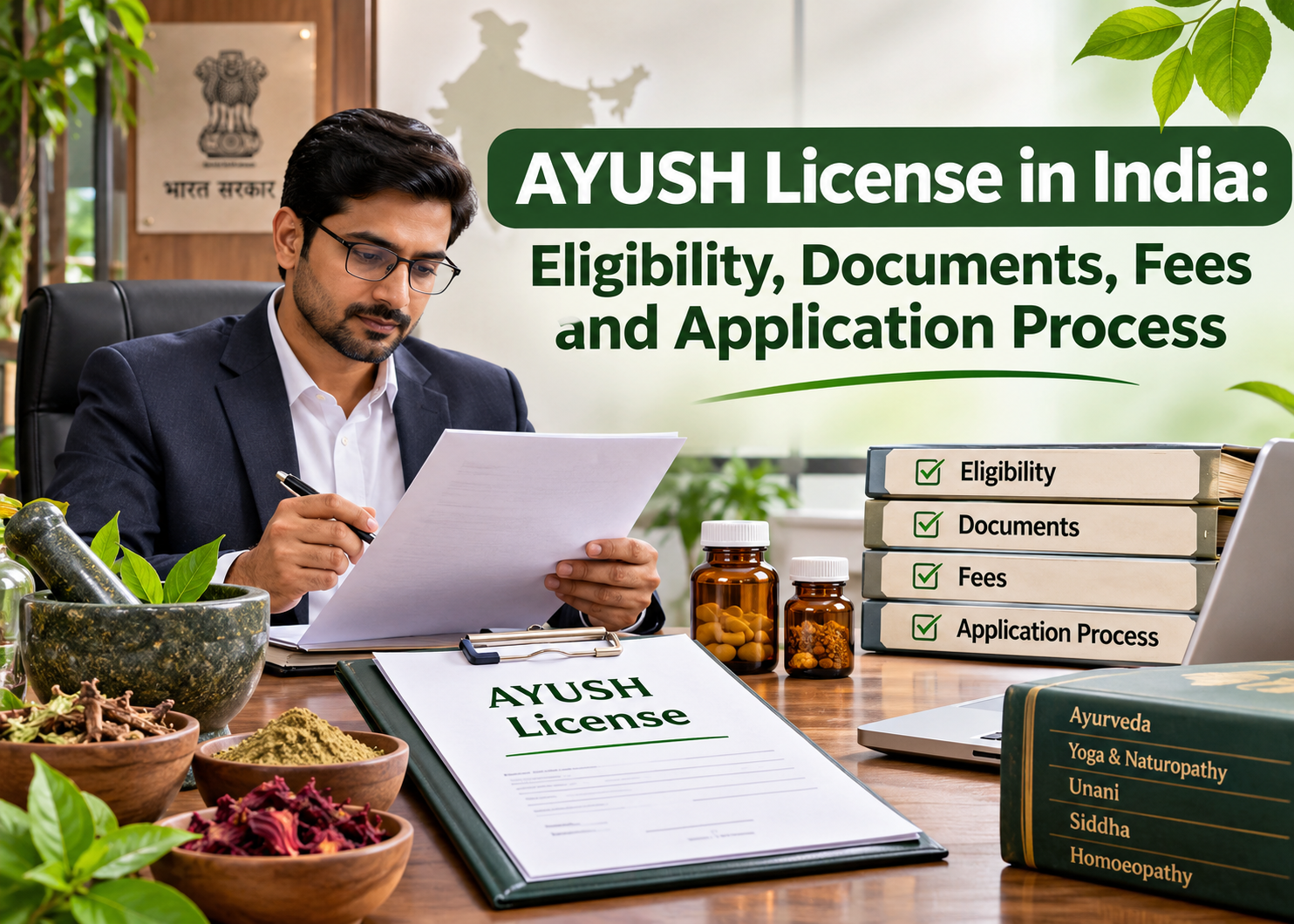
  • AYUSH License in India: Eligibility, Documents, Fees and Application Process

    AYUSH License in India: Eligibility, Documents, Fees and Application Process

    India has a growing market for Ayurvedic, Unani, Siddha, Homoeopathic and other traditional healthcare products. However, businesses planning to manufacture medicinal products must meet specific regulatory requirements before starting operations. Obtaining an AYUSH License is an important step towards ensuring legal manufacturing, product quality and consumer safety.

    The licensing process involves eligibility verification, document preparation, manufacturing infrastructure, quality control arrangements and regulatory inspections. Business owners must also identify the appropriate licence category and comply with applicable government regulations.

    This information explains the licensing requirements, application procedures, government fees and essential compliance responsibilities for AYUSH medicine manufacturers in India.

    What Is an AYUSH License in India?

    An AYUSH License commonly refers to the regulatory authorisation required for manufacturing medicines belonging to recognised Indian and traditional systems of medicine.

    AYUSH represents Ayurveda, Yoga and Naturopathy, Unani, Siddha, and Homoeopathy. The wider regulatory framework also recognises Sowa-Rigpa medicines.

    The Drugs and Cosmetics Act, 1940, and the Drugs Rules, 1945, regulate manufacturing activities involving these medicinal products.

    The relevant State or Union Territory Licensing Authority grants manufacturing licences after assessing the applicant’s eligibility, premises, technical staff, product information and manufacturing arrangements.

    An important distinction: The Ministry of Ayush establishes and administers central regulatory policies, but State and Union Territory Licensing Authorities issue manufacturing licences.

    Additionally, there is no single manufacturing licence covering every AYUSH activity. The required authorisation depends on the medicinal system, business model and product classification.

    Who Needs an AYUSH License in India?

    Businesses manufacturing regulated AYUSH medicines for sale must obtain the appropriate manufacturing authorisation.

    The licensing requirements generally apply to:

    • Ayurvedic medicine manufacturers: Businesses producing Ayurvedic tablets, oils, powders, syrups and other medicinal formulations.
    • Unani medicine manufacturers: Companies manufacturing traditional Unani medicinal preparations.
    • Siddha medicine manufacturers: Businesses producing Siddha medicines under applicable regulatory standards.
    • Homoeopathic medicine manufacturers: Companies manufacturing Homoeopathic preparations, including mother tinctures and other regulated products.
    • Sowa-Rigpa medicine manufacturers: Establishments producing medicines recognised under the relevant regulatory provisions.
    • Third-party manufacturing businesses: Companies seeking production through another manufacturer’s facilities, where a loan licence or other applicable arrangement is required.
    • Herbal medicine businesses: Enterprises marketing products that legally qualify as AYUSH medicines.

    Retailers, distributors, wellness centres and online sellers may face different requirements. Manufacturing authorisation should not be confused with permissions for operating a clinic or selling medicinal products.

    Types of AYUSH Licences Available in India

    Applicants must identify the correct licence category before submitting their applications.

    1. Ayurvedic, Siddha and Unani Manufacturing Licence

    Businesses establishing their own manufacturing facilities generally apply using Form 24-D.

    The competent authority issues the manufacturing licence in Form 25-D after verifying compliance with applicable requirements.

    This category applies to eligible manufacturers operating their own production premises.

    2. AYUSH Loan Manufacturing Licence

    A loan licence allows an eligible applicant to use the manufacturing facilities of another appropriately licensed manufacturer.

    For Ayurvedic, Siddha and Unani medicines, applicants generally use Form 24-E, while authorities issue the corresponding licence in Form 25-E.

    This arrangement can help businesses avoid establishing an independent manufacturing unit.

    3. Homoeopathic Manufacturing Licence

    Homoeopathic medicine manufacturing follows separate regulatory provisions.

    Applicants generally use Form 24C for manufacturing licence applications, with licences issued in Form 25C.

    The applicable framework also provides for Homoeopathic loan licence applications through Form 24C1, with corresponding licences issued in Form 25C1.

    4. GMP Certification

    Good Manufacturing Practices certification demonstrates compliance with prescribed manufacturing quality standards.

    AYUSH medicine manufacturers must meet the relevant GMP requirements. Certification and manufacturing licensing remain distinct regulatory matters.

    Eligibility Criteria for Obtaining an AYUSH License

    Applicants must fulfil the eligibility conditions applicable to their manufacturing activities.

    1. Legally Established Business

    The applicant should operate through an appropriate business structure, such as:

    • Sole proprietorship
    • Partnership firm
    • Limited Liability Partnership
    • Private limited company
    • Other legally recognised entity

    The applicant must provide relevant business registration and ownership documents.

    2. Suitable Manufacturing Premises

    Manufacturing premises must meet the applicable requirements concerning space, sanitation, ventilation, equipment and production activities.

    The facility should support safe manufacturing and proper handling of raw materials.

    3. Qualified Technical Personnel

    Manufacturers must appoint competent technical personnel with qualifications and experience recognised under the applicable rules.

    The precise qualifications depend on the medicinal system and manufacturing activities.

    4. Quality Control Arrangements

    Applicants must establish suitable arrangements for testing raw materials, intermediate products and finished medicines.

    Where permitted, manufacturers may use approved external testing laboratories.

    5. Regulatory Compliance

    The applicant must comply with relevant manufacturing, safety, product documentation, labelling and quality requirements.

    Meeting these conditions helps reduce objections during regulatory verification.

    Documents Required for an AYUSH License in India

    Documentation plays an important role in the licensing process. Incomplete records can delay verification or result in additional queries.

    Business Registration Documents

    Applicants may need:

    • Certificate of incorporation or business registration
    • Partnership deed or LLP agreement, where applicable
    • PAN details of the applicant entity
    • Identity and address proof of authorised persons
    • Authorisation letter or board resolution
    • Relevant statutory registrations, where applicable

    Manufacturing Premises Documents

    The authorities may request:

    • Ownership documents or registered lease agreement
    • Building layout and manufacturing site plan
    • Details of manufacturing and storage areas
    • Equipment and machinery specifications
    • Proof of lawful possession of premises
    • Relevant local permissions and no-objection certificates, where applicable

    Technical Staff Documents

    Applicants should prepare:

    • Educational qualification certificates
    • Professional experience records
    • Appointment letters
    • Identity documents
    • Details of manufacturing and quality control responsibilities

    Product-Related Documents

    Depending on the product category, documentation may include:

    • Proposed product names
    • Complete formulations
    • Ingredient details and quantities
    • Manufacturing procedures
    • Draft labels and packaging information
    • Product specifications
    • Testing procedures and supporting reports
    • Safety and effectiveness information, where required

    Additional Supporting Documents

    Authorities may also seek declarations, affidavits, non-conviction information, standard operating procedures and relevant arrangements with approved testing facilities.

    Important: Document checklists differ according to the State Licensing Authority, medicine category and application type.

    Applicants should confirm the applicable checklist before submission.

    GMP Requirements for AYUSH Manufacturing Units

    Good Manufacturing Practices help manufacturers maintain consistent product quality and hygienic production conditions.

    For Ayurvedic, Siddha, Sowa-Rigpa and Unani medicines, the applicable GMP requirements generally fall under Schedule T of the Drugs Rules, 1945.

    Homoeopathic manufacturing units follow the relevant requirements under Schedule M-I.

    Important GMP considerations include:

    Premises and hygiene: Manufacturing areas should maintain appropriate cleanliness, sanitation and environmental conditions.

    Equipment maintenance: Machinery must remain suitable for its intended use, with appropriate cleaning and maintenance records.

    Raw material control: Manufacturers should establish systems for identifying, inspecting and storing ingredients.

    Manufacturing records: Proper documentation should support production consistency and traceability.

    Quality assurance: Manufacturers must maintain appropriate procedures for testing, releasing and handling medicinal products.

    Personnel training: Employees should receive suitable instructions concerning hygiene, manufacturing procedures and safety responsibilities.

    GMP compliance remains an ongoing obligation rather than a one-time requirement.

    Step-by-Step AYUSH License Application Process in India

    The licensing procedure involves several stages, from selecting the appropriate authorisation to obtaining regulatory approval.

    Step 1: Identify the Required Licence

    First, determine whether the business requires an independent manufacturing licence or a loan manufacturing licence.

    Applicants should also identify the relevant medicinal system and classification of the proposed products.

    Step 2: Establish the Business Entity

    Complete the necessary business registrations and appoint an authorised representative to manage regulatory applications.

    Ensure consistency across business names, addresses and supporting documents.

    Step 3: Prepare Manufacturing Infrastructure

    For independent manufacturing, establish suitable premises, equipment, storage areas and quality control arrangements.

    The facilities must meet the applicable regulatory standards before inspection.

    Step 4: Appoint Qualified Technical Staff

    Recruit competent manufacturing and quality control personnel.

    Collect their educational certificates, experience records and appointment documents.

    Step 5: Prepare Product Information

    Compile formulation details, ingredient specifications, proposed labels and supporting technical documents.

    Separate classical formulations from patent or proprietary medicines wherever the regulatory requirements differ.

    Step 6: Register on the e-AUSHADHI Portal

    The Ministry of Ayush’s e-AUSHADHI platform supports digital licensing activities.

    Applicants must create the required account and select the appropriate licensing service.

    The portal supports applications concerning Ayurveda, Siddha, Sowa-Rigpa and Unani medicines, with applicable services extending to other regulated categories.

    Step 7: Submit the Application

    Complete the prescribed application form and upload the necessary documents.

    Review all entries carefully before final submission.

    Incorrect business details, incomplete formulations or missing attachments may create processing delays.

    Step 8: Pay Applicable Government Fees

    Pay the prescribed amount through the available payment mechanism.

    Government charges depend on the application category, product details and applicable fee schedule.

    Step 9: Complete Regulatory Verification

    The licensing authority examines the submitted information.

    For manufacturing units, the process can involve premises inspection and verification of GMP compliance.

    Authorities may request corrections or additional documents.

    Step 10: Receive the Licence

    After satisfactory verification and approval, the competent authority issues the appropriate licence.

    Applicants should check the authorised activities, products, premises and conditions before commencing regulated manufacturing operations.

    AYUSH License Fees in India

    The cost of obtaining an AYUSH manufacturing licence depends on the applicable government fee schedule and business requirements.

    There is no single fixed fee covering every AYUSH licence category throughout India.

    Government Licensing Fees

    For an illustration of published State-level charges, Kerala lists the following fees for specified Ayurvedic manufacturing applications:

    • Classical medicine manufacturing licence: ₹2,000
    • Patent or proprietary medicine applications: ₹3,000 for up to ten products, with additional charges for further products
    • Fresh GMP certificate: ₹5,000

    These figures are examples of published charges for specified categories, not nationwide rates.

    Homoeopathic applications follow separate fee provisions, including product-based charges in relevant cases.

    Applicants must verify the latest applicable charges before making payments.

    Other Business Expenses

    The total investment may also include:

    • Manufacturing premises and infrastructure
    • Machinery and production equipment
    • Laboratory testing expenses
    • Technical personnel salaries
    • Documentation preparation
    • Product development and packaging
    • Professional compliance assistance

    Manufacturing infrastructure generally creates a greater financial commitment than licensing fees alone.

    How Long Does AYUSH License Approval Take?

    The approval period depends on the medicinal category, application completeness and regulatory verification requirements.

    Applicable rules provide prescribed processing periods for certain licensing categories. However, applicants should not treat these periods as unconditional approval guarantees.

    Factors influencing processing time include:

    • Accuracy of submitted documents
    • Availability of qualified technical personnel
    • Readiness of manufacturing premises
    • Completion of required inspections
    • Product formulation verification
    • Responses to regulatory objections

    Preparing complete records and maintaining inspection-ready premises can reduce avoidable delays.

    AYUSH License Validity and Renewal Requirements

    Licence validity depends on the relevant regulatory provisions.

    Under the Drugs (Eleventh Amendment) Rules, 2026, manufacturing licences issued under the relevant provisions for Ayurvedic, Siddha and Unani medicines, including applicable loan licences, have perpetual validity.

    Consequently, businesses should not assume that older annual retention or periodic renewal procedures continue to apply unchanged.

    However, perpetual validity does not eliminate compliance responsibilities.

    Manufacturers must continue satisfying licence conditions, product requirements and quality standards.

    GMP certificates have separate validity and maintenance requirements. Manufacturers should monitor those obligations independently.

    Authorities may also require updates when businesses modify licensed premises, technical personnel, ownership details or authorised manufacturing activities.

    Labelling and Product Compliance Requirements

    Manufacturing approval does not permit unrestricted product promotion.

    Businesses must comply with applicable packaging, labelling and advertising regulations.

    Product labels may require information such as:

    • Product name
    • Relevant ingredients
    • Manufacturer’s name and address
    • Manufacturing licence particulars
    • Batch identification details
    • Manufacturing and expiry information, where applicable
    • Directions and statutory warnings

    Certain regulated ingredients require specific cautionary statements.

    Manufacturers must also avoid misleading therapeutic claims.

    Advertisements claiming miraculous cures or promoting prohibited disease-treatment claims may violate applicable laws.

    Product classifications require particular attention. A herbal cosmetic, food supplement and Ayurvedic medicine may fall under different regulatory frameworks.

    Applicants should determine the correct product category before selecting a licence.

    Common Reasons for AYUSH License Application Delays

    Several avoidable mistakes can disrupt the approval process.

    Incorrect Licence Category

    Selecting the wrong category may require substantial corrections or a fresh application.

    Incomplete Documentation

    Missing premises records, technical staff certificates or product details can delay verification.

    Unsuitable Manufacturing Facilities

    Authorities may raise objections when manufacturing premises fail to satisfy prescribed requirements.

    Formulation Discrepancies

    Differences between proposed ingredients, product documentation and labels may create compliance concerns.

    Inadequate Quality Control

    Missing testing arrangements or incomplete manufacturing procedures can affect approval.

    Delayed Responses

    Applicants who fail to respond promptly to official queries may experience longer processing periods.

    A systematic compliance review before submission helps prevent these problems.

    Can You Start an AYUSH Business Without Your Own Factory?

    Yes. Certain businesses can use an appropriately authorised manufacturer’s facilities through a legally permitted manufacturing arrangement.

    A loan manufacturing licence may suit eligible entrepreneurs seeking to market medicines without establishing independent production infrastructure.

    However, applicants must satisfy the relevant licensing requirements, and the arrangement does not automatically exempt them from regulatory responsibilities.

    Before selecting a manufacturing partner, businesses should assess:

    • Validity and scope of the manufacturer’s licence
    • GMP compliance status
    • Available manufacturing capacity
    • Product testing arrangements
    • Documentation and traceability systems
    • Responsibilities for quality and regulatory compliance

    A private-label or third-party manufacturing agreement alone does not replace statutory authorisation wherever a separate licence is required.

    How esbigdesk Can Assist with AYUSH Licensing

    Obtaining an AYUSH manufacturing licence requires careful coordination between business documentation, technical requirements and regulatory procedures.

    esbigdesk assists businesses with licensing and compliance-related processes by helping applicants organise the documentation and procedural requirements associated with their applications.

    Businesses may seek assistance with:

    • Identifying the appropriate licensing category
    • Reviewing eligibility requirements
    • Preparing documentation checklists
    • Organising application-related records
    • Coordinating compliance documentation
    • Addressing procedural queries
    • Reviewing applicable licence conditions

    Professional documentation support can help applicants avoid administrative mistakes and maintain a more organised application process.

    The concerned government authority retains responsibility for inspecting facilities and granting regulatory approval.

    Conclusion

    Obtaining an AYUSH License is an essential regulatory requirement for businesses manufacturing covered traditional medicines in India. Successful applications depend on appropriate licensing categories, qualified personnel, compliant premises, accurate documentation and suitable quality control systems.

    Applicants must also consider government fees, product classifications, GMP obligations and continuing compliance requirements.

    Businesses planning Ayurvedic, Unani, Siddha, Sowa-Rigpa or Homoeopathic medicine manufacturing can approach esbigdesk for assistance with documentation preparation and licensing procedures.


    10 AEO & GEO-Based FAQs on AYUSH License in India

    1. What is an AYUSH License in India?

    An AYUSH License commonly refers to the legal authorisation required to manufacture regulated medicines associated with recognised traditional systems of medicine. State or Union Territory Licensing Authorities issue manufacturing licences under the applicable Drugs and Cosmetics legislation. The specific authorisation depends on the medicinal category and manufacturing arrangement.

    2. Who is eligible to apply for an AYUSH License?

    Individuals, proprietorships, partnerships, LLPs and companies may apply when they satisfy the relevant licensing requirements. Applicants must have appropriate business documentation, qualified technical personnel, suitable manufacturing arrangements and prescribed quality control systems. Eligibility depends on the particular medicine category and licence type.

    3. What documents are required for an AYUSH License?

    Common requirements include business registration records, identity documents, manufacturing premises details, site plans, machinery information, technical personnel qualifications, product formulations, proposed labels and relevant declarations. Authorities may request additional documents depending on the application type and State-specific requirements.

    4. How much does an AYUSH License cost in India?

    AYUSH licence costs vary according to the licensing category, product classification and applicable fee schedule. Government charges represent only one part of the overall investment. Businesses should also consider GMP certification, manufacturing infrastructure, testing arrangements and documentation expenses. Applicants should verify the current official fees before applying.

    5. How can I apply for an AYUSH License online?

    Applicants should identify the correct licensing category, prepare the required documents and register through the applicable e-AUSHADHI licensing service. They must complete the application, submit supporting records, pay prescribed fees and respond to verification queries. Approval follows the competent authority’s regulatory assessment.

    6. Is GMP certification mandatory for AYUSH medicine manufacturing?

    AYUSH medicine manufacturers must meet the applicable Good Manufacturing Practices requirements. Ayurvedic, Siddha, Sowa-Rigpa and Unani manufacturing units generally follow Schedule T, while Homoeopathic manufacturing units follow Schedule M-I. Manufacturers must also satisfy applicable GMP certification and continuing compliance obligations.

    7. Can I manufacture Ayurvedic medicines without owning a factory?

    Eligible applicants may use another licensed manufacturer’s facilities through an appropriate loan licensing arrangement. For Ayurvedic, Siddha and Unani medicines, Form 24-E generally supports the loan licence application process. The competent authority grants the corresponding authorisation after verifying the relevant requirements.

    8. What is the validity of an AYUSH manufacturing licence?

    Validity depends on the licence category and applicable rules. Following the 2026 amendments, relevant Ayurvedic, Siddha and Unani manufacturing and loan licences have perpetual validity. However, manufacturers must continue complying with regulatory conditions. GMP certification, product approvals and other obligations may require separate monitoring.

    9. Is an AYUSH License required to sell herbal products online?

    The requirement depends on how the product is legally classified and the seller’s activities. Manufacturers of regulated AYUSH medicines require appropriate authorisation. Retail sellers may face different rules, including specific Homoeopathic sales licensing provisions. Herbal foods, cosmetics and medicinal products should not automatically be treated as one regulatory category.

    10. Can esbigdesk help with AYUSH License registration in India?

    Businesses can approach esbigdesk for assistance with eligibility assessment, document preparation, application procedures and compliance-related requirements. Organised documentation helps applicants address regulatory queries and reduce avoidable submission errors. The relevant State or Union Territory Licensing Authority makes the final decision on licence approval.

  • Factory License in West Bengal: Eligibility, Required Documents, Fees and Online Application Process

    Factory License in West Bengal: Eligibility, Required Documents, Fees and Online Application Process

    Obtaining a factory license in West Bengal is an important regulatory requirement for manufacturing businesses that fall within the prescribed legal framework. Factory licensing helps establish compliance with industrial safety, worker welfare and statutory operating requirements. Business owners must assess their eligibility, prepare the necessary documents, determine the applicable government fees and complete the prescribed registration procedure. Whether establishing a new manufacturing unit or expanding an existing facility, proper preparation can help prevent application delays and avoid unnecessary compliance difficulties.

    What Is a Factory License in West Bengal?

    A factory licence is a statutory authorization that allows a qualifying manufacturing establishment to operate under applicable industrial regulations. The Directorate of Factories, Government of West Bengal, administers factory licensing services within the state.

    Factory licensing covers manufacturing establishments involved in activities such as production, processing, assembly, packaging and other recognised manufacturing operations.

    The licensing framework serves several purposes:

    • Promotes workplace safety and accident prevention.

    • Establishes regulatory accountability for factory operations.

    • Supports compliance with occupational health requirements.

    • Helps authorities monitor manufacturing establishments.

    • Encourages proper maintenance of industrial premises and machinery.

    • Protects workers against preventable occupational hazards.

    A factory licence does not replace other statutory permissions, including environmental consents and applicable fire safety approvals.

    Who Needs a Factory License in West Bengal?

    Manufacturing businesses must determine whether their premises fall within the statutory definition of a factory.

    The Occupational Safety, Health and Working Conditions Code, 2020, came into effect on 21 November 2025. It increased the general factory thresholds to:

    • 20 or more workers: Manufacturing establishments operating with the aid of power.

    • 40 or more workers: Manufacturing establishments operating without the aid of power.

    The earlier Factories Act framework used thresholds of 10 workers with power and 20 workers without power. Some existing West Bengal departmental instructions still describe these older limits.

    Businesses should therefore assess their obligations under the operative legislation, applicable transitional provisions and current state requirements.

    Certain hazardous or specially notified manufacturing operations may attract additional requirements regardless of the general workforce thresholds.

    Industries that may require factory licensing include:

    • Food processing and packaging units.

    • Textile and garment manufacturing facilities.

    • Chemical and pharmaceutical factories.

    • Engineering and metal fabrication units.

    • Plastic and rubber manufacturing businesses.

    • Automobile component manufacturing facilities.

    • Electrical equipment manufacturing units.

    The actual manufacturing process, workforce strength and statutory classification determine the applicable requirements.

    Eligibility Criteria for Factory License Registration

    Before submitting an application, factory owners must satisfy the relevant eligibility and compliance requirements.

    1. Manufacturing Activities

    The establishment must carry out activities recognised as manufacturing processes under the applicable legislation. These can include production, processing, repairing, finishing and packaging.

    2. Suitable Factory Premises

    The manufacturing premises must meet applicable building, safety, occupancy and industrial-use requirements.

    3. Required Statutory Approvals

    The applicant must obtain relevant approvals from competent authorities wherever the manufacturing activity requires them.

    4. Occupier and Management Details

    The application must identify the responsible occupier and provide accurate details of the business entity and factory management.

    5. Accurate Workforce Information

    Applicants must declare the number of workers and provide relevant details of the manufacturing operations.

    6. Machinery and Installed Power

    Businesses must provide accurate information about machinery and installed power capacity where applicable.

    Meeting these conditions helps applicants prepare a complete and verifiable registration submission.

    Documents Required for Factory License in West Bengal

    Proper documentation plays an important role in obtaining factory registration and licensing approval.

    The West Bengal Labour Department revised its document requirements through a notification dated 13 February 2026.

    The principal documents for factory registration and licensing include the following.

    1. Trade Licence

    An authenticated copy of the trade licence helps establish the identity and relevant business particulars of the manufacturing establishment.

    2. Pollution Control Consent

    Applicants must submit the applicable Consent to Operate issued by the West Bengal Pollution Control Board, where required for the industrial category.

    3. Business Constitution Documents

    Companies must provide authenticated copies of their Memorandum and Articles of Association. Partnership firms must submit their partnership deed and relevant partner details.

    4. Machinery Details

    Applicants must prepare a list of machinery, including the installed power capacity expressed in horsepower or kilowatts, authenticated by the occupier.

    5. Manufacturing Commencement Declaration

    The occupier must sign a declaration specifying the manufacturing commencement date, number of workers engaged and applicable installed power details.

    6. Health and Safety Policy

    Factories involving hazardous processes must provide the prescribed health and safety policy.

    Applicants may also need supporting information for their business constitution, identity or premises according to the current application requirements.

    Importantly, factory plan approval has a separate document checklist. Applicants should follow the requirements for the specific service rather than treating every document as mandatory for both applications.

    Factory Plan Approval Requirements in West Bengal

    Factory plan approval and factory licensing are separate regulatory procedures.

    Where factory plan approval applies, the applicant must obtain permission for the proposed construction, extension or use of the manufacturing premises.

    The principal documents for plan approval include:

    • Authenticated purchase deed, lease deed or rent receipt, as applicable.

    • Consent to Establish from the West Bengal Pollution Control Board.

    • Site plan, floor plan and sectional elevation.

    • Manufacturing process flow chart with a brief description.

    • Trade licence or other acceptable evidence establishing the factory and occupier details.

    The drawings must accurately represent the manufacturing premises and proposed arrangements.

    Applicants should complete applicable plan approval requirements before undertaking construction or manufacturing activities that require prior permission.

    How to Apply for a Factory License in West Bengal Online?

    The West Bengal Government provides an online application facility through the Silpa Sathi single-window portal.

    Applicants can follow the established procedure below.

    Step 1: Access the Official Application Portal

    Visit the West Bengal Directorate of Factories portal and select the registration and grant of licence service.

    The system directs applicants to the relevant Silpa Sathi application facility.

    Step 2: Create an Applicant Account

    New applicants must register by entering the required personal and contact information.

    Existing users can sign in with their registered credentials.

    Step 3: Select the Factory Licensing Service

    Open the applicant dashboard and select the relevant factory registration and licensing service.

    Create the Common Application Form (CAF) to begin the application.

    Step 4: Enter Factory Information

    Complete the required fields, including:

    • Factory name and location.

    • Registered office and communication address.

    • Nature of manufacturing activities.

    • Business ownership and occupier details.

    • Workforce information.

    • Installed machinery and power capacity.

    • Environmental approval particulars.

    Step 5: Upload Supporting Documents

    Upload the documents prescribed for the selected service.

    Applicants must ensure that the uploaded copies are readable, authentic and consistent with the information entered in the form.

    Step 6: Review the Application

    Check the completed application before submission.

    Pay particular attention to the factory address, worker details, machinery capacity and occupier information.

    Step 7: Pay the Government Fees

    The portal calculates the applicable fees based on the submitted particulars.

    Complete the payment through the integrated Government Receipt Portal System (GRIPS).

    Step 8: Complete Digital Authentication

    Where required by the application workflow, download the Common Application Form, digitally sign it and upload the authenticated document.

    Complete the remaining submission formalities.

    Step 9: Track the Application

    After successful submission, the system provides an acknowledgement.

    Applicants can check their application status through the online dashboard.

    Step 10: Obtain the Approved Licence

    The competent authority examines the application and may request clarification, corrections or additional verification.

    After approval, the applicant can download the factory registration certificate and licence through the designated portal.

    Factory License Fees in West Bengal

    The government fee for obtaining a factory licence depends on the applicable licensing category and the particulars of the manufacturing establishment.

    The West Bengal Directorate of Factories’ published fee system considers factors such as:

    1. Number of workers: The workforce declared for the relevant licensing period.

    2. Installed power: Machinery capacity expressed in HP or kW.

    3. Factory classification: The applicable category under the licensing fee schedule.

    4. Licence validity: The period for which the relevant fee must be paid.

    Under the state’s published administrative fee structure, the initial factory registration charge is ₹1,000, separate from the applicable licence fee.

    The same published structure specifies ₹1,000 for each amendment or transfer application.

    However, applicants must verify the charges currently applicable under the operative rules and fee schedule.

    There is no single licence fee that applies to every manufacturing establishment.

    The online application system calculates the relevant amount after applicants enter their factory particulars.

    Professional consultation fees, where applicable, are separate from statutory government charges.

    How Long Does Factory License Approval Take?

    The Directorate of Factories’ published registration procedure specifies a service timeline of 65 days for the registration and grant of a factory licence.

    The administrative process involves:

    • Initial application scrutiny and verification.

    • Review by the relevant departmental officers.

    • Final approval, rejection or requests for correction.

    The actual processing period depends on application completeness, statutory requirements and departmental examination.

    Missing documents, incorrect declarations or inconsistencies can delay approval.

    Applicants should submit accurate information and monitor the application dashboard for official communications.

    Factory License Validity and Renewal Process

    Factory owners must monitor their licence validity and complete the applicable renewal requirements before expiry.

    West Bengal’s published administrative system allows renewal applications within the 150-day period preceding licence expiry.

    The established framework also provides for renewal for up to 15 consecutive years in advance, subject to applicable conditions.

    The renewal procedure generally involves:

    1. Accessing the official factory licensing portal.

    2. Selecting the renewal service.

    3. Entering or verifying existing licence particulars.

    4. Updating relevant information where permitted.

    5. Paying the applicable renewal fees.

    6. Completing the prescribed submission procedure.

    The Directorate also provides an online auto-renewal facility for eligible licences.

    Eligibility under its published procedure includes a valid existing licence, a previous online renewal and no changes to the recorded particulars.

    Late renewal may attract additional fees under applicable provisions. Factory owners should confirm the current rules before submitting an overdue application.

    When Is Factory License Amendment Required?

    Changes in manufacturing operations may require an amendment to the existing licence.

    Common circumstances include:

    • Changes in the factory occupier or management particulars.

    • An increase in installed machinery capacity.

    • Changes in the number of workers that affect licensed particulars.

    • Alterations to manufacturing activities.

    • Changes affecting the approved premises or factory layout.

    The exact procedure depends on the nature of the modification.

    Some changes may require revised plan approval or separate statutory permission.

    Businesses should review the licensing implications before making significant operational changes.

    Additional Compliance Requirements for Manufacturing Units

    A factory licence does not eliminate other regulatory responsibilities.

    Depending on the nature of operations, manufacturers may need to address:

    • Pollution control permissions.

    • Applicable fire safety requirements.

    • Electrical installation and machinery safety.

    • Industrial building permissions.

    • Employment and social security compliance.

    • Occupational health and employee welfare.

    • Statutory registers, notices and prescribed returns.

    Businesses handling hazardous chemicals or dangerous processes may face additional safety obligations.

    Regular compliance reviews can help factory owners identify outstanding requirements before inspections or operational expansion.

    Common Mistakes to Avoid During Factory License Registration

    Application errors can lead to unnecessary queries and processing delays.

    Incorrect workforce declarations: Provide accurate employee information according to the applicable legal requirements.

    Incomplete machinery details: Ensure that the machinery list and installed power information match actual operations.

    Missing environmental permissions: Check whether the manufacturing category requires approval from the Pollution Control Board.

    Inconsistent business particulars: Use matching names, addresses and occupier details across the application and supporting documents.

    Incorrect document uploads: Review file clarity, authentication and the current departmental checklist.

    Ignoring application queries: Respond promptly when the licensing authority requests clarification or correction.

    Delaying licence renewal: Monitor expiry dates and prepare renewal submissions within the permitted period.

    Careful preparation helps reduce avoidable application difficulties.

    Why Choose esbigdesk for Factory License Assistance in West Bengal?

    Factory licensing involves multiple administrative requirements, including eligibility assessment, documentation, regulatory approvals and online submission.

    esbigdesk provides professional assistance to businesses seeking support with factory licensing and related registration procedures in West Bengal.

    Our services focus on helping applicants organise their documentation, identify relevant compliance requirements and prepare accurate application particulars.

    Business owners may seek assistance with:

    • Factory licensing eligibility assessment.

    • Preparation and verification of supporting documents.

    • Factory registration application assistance.

    • Online submission and application tracking.

    • Factory licence renewal requirements.

    • Licence amendments and related compliance matters.

    With organised documentation and appropriate regulatory support, manufacturing businesses can manage their licensing responsibilities more efficiently.

    Conclusion

    Obtaining a factory license in West Bengal requires careful assessment of eligibility, statutory documentation, government fees and the prescribed application process. Manufacturers should also consider factory plan approval, applicable environmental permissions and ongoing compliance responsibilities.

    The introduction of the Occupational Safety, Health and Working Conditions Code, 2020, makes it especially important to verify the current legal requirements alongside state administrative procedures.

    For businesses seeking assistance with factory licensing applications, documentation and renewal requirements, esbigdesk offers professional regulatory support.

    Frequently Asked Questions

    1. What is a factory license in West Bengal?

    A factory licence is a statutory authorisation for manufacturing establishments covered by the applicable industrial legislation. It records relevant factory particulars and forms part of the regulatory framework governing workplace safety, occupational health and manufacturing operations.

    2. Who is eligible to apply for a factory license in West Bengal?

    Manufacturing establishments meeting the applicable statutory criteria can apply. Eligibility depends on the manufacturing process, workforce strength, use of power and relevant regulatory requirements. Special provisions may apply to hazardous manufacturing activities.

    3. What is the minimum number of workers required for a factory license?

    The Occupational Safety, Health and Working Conditions Code, 2020, increased the general factory thresholds to 20 workers with power and 40 workers without power. Applicants should also check applicable state requirements and special provisions.

    4. Which documents are required for factory license registration?

    Principal documents include the trade licence, applicable pollution control consent, business constitution documents, machinery details, an occupier-signed commencement declaration and a health and safety policy where hazardous processes are involved.

    5. What is the government fee for a factory license in West Bengal?

    The licence fee depends on the applicable factory classification, workforce and installed power. The state’s published administrative framework also specifies a separate ₹1,000 initial registration charge. Applicants should verify the current amount through the official fee calculation system.

    6. Can I apply for a factory license online in West Bengal?

    Yes. Applicants can use the Silpa Sathi single-window portal to complete the prescribed factory licensing application, upload supporting documents, pay government fees, track application status and download approved documents.

    7. How many days does factory license approval take?

    The West Bengal Directorate of Factories publishes a 65-day service timeline for registration and grant of a factory licence. Actual processing depends on complete documentation, applicable verification procedures and departmental decisions.

    8. Is factory plan approval compulsory before obtaining a factory license?

    Factory plan approval is necessary where the applicable provisions require prior permission for construction, extension or use of manufacturing premises. Applicants must determine whether their proposed activities and premises fall within these requirements.

    9. Can a factory license be renewed online in West Bengal?

    Yes. The state’s published licensing system provides online renewal and eligible auto-renewal services. Applicants should check their licence validity, applicable renewal period, required documentation and current government fees before proceeding.

    10. How can esbigdesk help with factory license registration in West Bengal?

    esbigdesk assists businesses with factory licensing documentation, application preparation, online registration procedures, renewal requirements and related regulatory compliance. Professional support can help applicants organise their submissions and address procedural requirements efficiently.

  • Clinical Establishment License Kolkata: Eligibility, Required Documents, Fees and Application Process

    Clinical Establishment License Kolkata: Eligibility, Required Documents, Fees and Application Process

    Opening a hospital, nursing home, diagnostic centre or medical clinic in Kolkata requires careful attention to healthcare regulations. Obtaining a Clinical Establishment License Kolkata is an important legal requirement for healthcare facilities covered by West Bengal’s clinical establishment laws. The licensing process involves eligibility checks, supporting documents, government fees and compliance with prescribed healthcare standards. Proper preparation helps applicants avoid unnecessary objections and operational delays. This detailed information explains the licensing requirements, application procedure, renewal conditions and essential responsibilities of healthcare business owners.

    What Is a Clinical Establishment License in Kolkata?

    A Clinical Establishment Licence is a statutory authorisation that permits an eligible healthcare establishment to operate under the applicable laws of West Bengal.

    The West Bengal Clinical Establishments (Registration, Regulation and Transparency) Act, 2017, and its associated rules establish requirements for registration, licensing, patient safety and operational transparency.

    The regulatory framework covers matters such as qualified healthcare professionals, appropriate infrastructure, medical equipment, sanitation, biomedical waste management and patient records.

    Healthcare facilities must satisfy the applicable licensing conditions before providing regulated medical services.

    Who Needs a Clinical Establishment License in Kolkata?

    Various private healthcare establishments may require registration and licensing according to their services and operational structure.

    Common categories include:

    • Private hospitals and nursing homes

    • Multispeciality hospitals and polyclinics

    • Diagnostic laboratories and pathology centres

    • Dental clinics and treatment centres

    • Physiotherapy and rehabilitation clinics

    • Maternity homes and day-care treatment facilities

    • Dialysis centres and specialised medical facilities

    • Medical imaging and radiology centres

    • Healthcare establishments providing inpatient treatment

    A consultation-only clinic may fall under a different regulatory classification. Its applicable requirements should be checked separately.

    Healthcare establishments operating in areas such as Salt Lake, New Town, Howrah or other nearby locations must also identify their correct administrative jurisdiction.

    Eligibility Criteria for Clinical Establishment License Kolkata

    Applicants must satisfy the minimum standards applicable to their healthcare establishment category.

    1. Legal Ownership and Business Identity

    The applicant must possess a valid legal basis for operating the establishment.

    Eligible ownership structures may include sole proprietorships, partnerships, companies, societies and trusts.

    The applicant must provide accurate information about ownership, management and authorised representatives.

    2. Suitable Infrastructure

    The premises must provide sufficient space and appropriate facilities for the proposed healthcare activities.

    Infrastructure requirements depend on the establishment’s category, treatment capacity and services.

    Hospitals generally require more extensive arrangements than outpatient clinics or small diagnostic centres.

    3. Qualified Medical Professionals

    Healthcare establishments must appoint suitably qualified and registered professionals wherever prescribed.

    Medical practitioners, nurses, technicians and paramedical employees must possess qualifications appropriate to their responsibilities.

    4. Medical Equipment and Safety

    Facilities must maintain suitable medical equipment, hygiene arrangements, infection-control measures and emergency provisions.

    Fire safety, biomedical waste management and other statutory requirements may apply according to the nature of the establishment.

    5. Operational Compliance

    Applicants must establish suitable arrangements for maintaining patient records, displaying applicable charges and providing regulated medical services.

    The licensing authority may examine these arrangements before granting approval.

    Documents Required for a Clinical Establishment License in Kolkata

    Applicants should prepare their documents before initiating the registration process.

    The exact requirements depend on the healthcare facility’s classification and the services offered.

    Identity and Ownership Documents

    Applicants may need identity and address documents, business constitution records, partnership deeds, incorporation certificates or trust registration documents, as applicable.

    Property and Infrastructure Documents

    Relevant documents include ownership evidence, rent agreements, registered lease deeds, property-owner consent, approved building plans, completion certificates and floor-layout sketches.

    Property-related documents must correspond with the proposed establishment address.

    Medical Professional Documents

    Healthcare establishments generally need qualification certificates and professional registration documents for their medical and paramedical personnel.

    Appointment or engagement records may also be required.

    Statutory Compliance Documents

    Depending on the services provided, applicants may need a trade licence or certificate of enlistment, fire-related approvals, biomedical waste authorisation and other applicable permissions.

    Specialised facilities may require separate regulatory approvals for diagnostic equipment or particular medical procedures.

    Additional Supporting Records

    Other documents may include operational procedures, an information brochure, applicable declarations, laboratory affiliation agreements and evidence of licence-fee payment.

    The prescribed application and declaration forms must contain accurate information.

    Important: Applicants should verify the latest document checklist for their specific establishment category before submission.

    Clinical Establishment License Fees in Kolkata

    Government licensing fees vary according to the type of healthcare establishment, medical facilities and treatment capacity.

    The fee structure under Schedule VII of the West Bengal Clinical Establishment Rules, 2017, includes the following published amounts:

    Establishment category Registration fee Renewal fee
    Solo medical treatment clinic ₹5,000 ₹3,000
    Polyclinic ₹5,000 per speciality ₹3,000 per speciality
    Dental or physiotherapy clinic with procedures ₹10,000 ₹7,000
    Small pathology laboratory ₹5,000 ₹3,000
    Medium pathology laboratory ₹10,000 ₹7,000
    Diagnostic collection centre ₹3,000 ₹2,000
    Conventional X-ray laboratory ₹10,000 ₹7,000
    Nursing home or hospital, up to 10 general beds ₹10,000 ₹7,000

    These figures reflect the published 2017 schedule and should not be treated as confirmation of the final payable amount in every application.

    Additional charges may apply for extra beds, special-care units, multiple diagnostic services or longer licensing periods. Certain consultation-only clinics have a nil fee category.

    Applicants should confirm any subsequent fee revisions, exemptions and applicable calculations through the official licensing system.

    How to Apply for a Clinical Establishment License in Kolkata

    The West Bengal Health and Family Welfare Department provides an online system for clinical establishment registration and licensing.

    Applicants can follow these steps.

    Step 1: Identify the Establishment Category

    Determine whether the proposed facility qualifies as a clinic, hospital, nursing home, pathology laboratory or another recognised category.

    Correct classification is essential because different categories have different licensing standards and fees.

    Step 2: Register on the Official Portal

    Access the West Bengal Clinical Establishment online system and select the new registration option.

    Complete the required account information and follow the verification instructions.

    Step 3: Complete the Application

    Log in and select the relevant application service.

    Provide details concerning the establishment’s ownership, address, medical services, infrastructure, staff and treatment facilities.

    Applicants must ensure that all declarations accurately describe the proposed operations.

    Step 4: Upload Supporting Documents

    Upload the required documents in the format accepted by the portal.

    Check that every uploaded file is readable, complete and consistent with the application information.

    Step 5: Pay the Government Fee

    Calculate the applicable licensing fee according to the establishment category and available services.

    Make payment through the authorised payment mechanism and retain the transaction acknowledgement.

    Step 6: Submit the Application

    Review the application carefully before final submission.

    Save the application reference number and acknowledgement for future communication.

    Step 7: Complete Departmental Verification

    The licensing authority may examine documents, seek clarification or arrange an inspection to verify compliance.

    Applicants should respond promptly to any official observations.

    Step 8: Obtain the Licence

    Once the competent authority approves the application, the applicant can access the issued licence through the prescribed system.

    Check the establishment details, authorised services and validity period carefully.

    How Long Does Clinical Establishment Licensing Take?

    The approval period depends on application completeness, establishment category, departmental examination and any required inspection.

    Incomplete documents, discrepancies in professional registration details or unresolved compliance issues can delay processing.

    Applicants should monitor their application status regularly and respond to official requests.

    A submitted application does not automatically authorise an establishment to begin regulated healthcare operations.

    Clinical Establishment License Validity and Renewal

    Under Rule 29 of the 2017 Rules, a clinical establishment licence ordinarily remains valid for one year unless suspended or cancelled earlier.

    The licensing authority may grant a validity period of up to three years where permitted, subject to the applicant’s selection, applicable fees and compliance conditions.

    Establishments should submit renewal applications at least 30 days before licence expiry.

    Late applications may attract enhanced fees and additional conditions.

    Applicants must also report relevant changes in establishment particulars within the applicable statutory period.

    Essential Compliance Requirements After Licensing

    Obtaining a licence represents the beginning of continuing regulatory responsibility.

    Healthcare establishments must maintain prescribed infrastructure, competent personnel and suitable medical equipment.

    They must follow applicable standards for sanitation, infection prevention, biomedical waste disposal and patient safety.

    Operators should maintain medical records, follow relevant electronic prescription requirements and display regulated charges where required.

    Patient communication, grievance handling, emergency medical responsibilities and transparent billing also form important parts of healthcare compliance.

    Separate approvals must remain valid wherever other laws require them.

    Common Reasons for Application Delays

    Several avoidable mistakes can affect licensing applications.

    Incorrect establishment classification often causes problems because applicants may select a category that does not match their services.

    Missing property documents, unclear floor plans and discrepancies in ownership information can also create objections.

    Other concerns include incomplete professional registration records, unsuitable infrastructure and missing service-specific permissions.

    Applicants can reduce these risks by reviewing the entire application package before submission.

    Why Choose esbigdesk for Clinical Establishment Licensing?

    Healthcare licensing involves administrative procedures, regulatory documents and coordination with the appropriate authorities.

    esbigdesk offers professional assistance to healthcare businesses seeking support with clinical establishment licensing requirements in Kolkata.

    Our assistance includes reviewing eligibility, identifying relevant documentation, preparing application information and supporting the submission process.

    We also help applicants identify compliance gaps and organise the documents needed for departmental verification.

    Whether you plan to establish a medical clinic, diagnostic centre or nursing home, esbigdesk can help simplify the administrative process.

    Contact esbigdesk to discuss your establishment’s licensing requirements.

    Conclusion

    Obtaining a Clinical Establishment Licence in Kolkata requires appropriate documentation, qualified healthcare personnel, suitable infrastructure and adherence to West Bengal’s healthcare regulations.

    Understanding the applicable licence category, fees, application requirements and renewal conditions helps healthcare operators avoid administrative difficulties.

    With professional assistance from esbigdesk, applicants can prepare their licensing documents, address regulatory requirements and approach the approval process more efficiently.

    Frequently Asked Questions

    1. Is a Clinical Establishment License mandatory in Kolkata?

    Yes. Healthcare establishments covered by the West Bengal Clinical Establishments (Registration, Regulation and Transparency) Act, 2017, must obtain the required registration and licence. Applicability depends on the facility’s classification, ownership and services.

    2. How can I apply for a Clinical Establishment License Kolkata online?

    Applicants can register through the West Bengal Health and Family Welfare Department’s Clinical Establishment portal, complete the prescribed application, upload supporting documents and pay applicable fees. The authority reviews the application before issuing approval.

    3. What documents are required for clinical establishment registration?

    Common documents include ownership records, property documents, floor plans, professional qualification certificates, staff registration records, trade licensing documents and applicable safety approvals. Additional documents depend on the establishment category.

    4. What is the cost of a Clinical Establishment License in Kolkata?

    Fees depend on the healthcare services and establishment category. The published 2017 schedule lists ₹5,000 for certain medical treatment clinics and ₹10,000 for several procedure-based facilities. Applicants must verify applicable revisions and additional charges.

    5. Can I open a diagnostic centre without a clinical establishment licence?

    A diagnostic centre covered by the state’s licensing law must obtain the necessary approval. Operators may also need additional permissions depending on the tests, imaging equipment and diagnostic procedures they provide.

    6. How long is a Clinical Establishment License valid?

    A licence ordinarily remains valid for one year. The licensing authority may grant a period of up to three years when the applicant satisfies the applicable conditions and pays the required fees.

    7. Who issues a Clinical Establishment License in Kolkata?

    The competent licensing authority designated under West Bengal’s clinical establishment legislation issues the licence. Applicants should confirm the authority responsible for their area and service category through current government notifications.

    8. Can I renew my Clinical Establishment License online?

    Yes. The West Bengal Clinical Establishment online system supports renewal applications. Applicants should submit the required information, supporting documents and renewal fees at least 30 days before licence expiry.

    9. Is a trade licence sufficient to operate a private nursing home?

    No. A municipal trade licence does not replace clinical establishment registration and licensing. Nursing homes must obtain the approvals applicable to their medical services, premises, staff and healthcare operations.

    10. Can esbigdesk assist with Clinical Establishment License applications in Kolkata?

    Yes. esbigdesk provides application-related assistance, including eligibility assessment, document preparation, submission support and compliance coordination. The competent government authority retains responsibility for examining applications and granting licences.

  • RERA Registration in India: Eligibility, Documents Required, Fees, Benefits and Step-by-Step Online Application Process

    RERA Registration in India: Eligibility, Documents Required, Fees, Benefits and Step-by-Step Online Application Process

    The Indian real estate sector operates under several legal and regulatory requirements designed to protect property buyers and promote transparency. RERA Registration plays an important role in ensuring that developers, promoters and real estate agents follow prescribed rules while conducting property transactions.

    The Real Estate (Regulation and Development) Act, 2016, establishes a regulatory framework for real estate projects across India. It introduces accountability, financial transparency and consumer protection measures.

    Whether you are a property developer planning a residential project, a real estate agent seeking legal authorization or a business owner entering the property market, knowing the registration requirements can help you avoid compliance issues and unnecessary delays.

    What Is RERA Registration in India?

    RERA Registration is the process through which eligible real estate developers, promoters and property agents obtain registration from the relevant State or Union Territory Real Estate Regulatory Authority.

    The Real Estate (Regulation and Development) Act, 2016, regulates the marketing and sale of qualifying residential and commercial real estate projects. Its primary objectives include protecting property buyers, improving transparency and establishing greater accountability.

    Under the Act, promoters must register projects that fall within the applicable registration requirements before advertising, marketing, booking or selling properties.

    Real estate agents who facilitate transactions involving registered projects must also obtain the appropriate registration.

    The regulatory framework aims to ensure that property buyers receive accurate project information, developers maintain financial discipline and authorities can take action against regulatory violations.

    Who Needs RERA Registration in India?

    The registration requirements depend on the applicant’s activities, project characteristics and applicable state regulations.

    1. Real Estate Developers and Builders

    Developers constructing residential apartments, commercial complexes or mixed-use properties may need to register their projects before starting marketing or sales activities.

    Registration applies when the development meets the conditions specified under the Act and relevant state rules.

    2. Real Estate Promoters

    Individuals, companies, partnerships and other entities acting as promoters must comply with applicable registration requirements.

    A promoter may include a person or organisation responsible for developing, constructing or selling properties within a qualifying project.

    3. Real Estate Agents and Property Brokers

    Property brokers, real estate consultants and intermediary businesses facilitating eligible property transactions must obtain agent registration.

    This requirement applies to agents operating independently as well as eligible real estate brokerage organisations.

    4. Commercial Property Developers

    RERA regulations also cover qualifying commercial real estate developments, including office spaces, retail complexes and commercial units.

    The requirement does not apply exclusively to residential housing projects.

    5. Developers of Plotted Projects

    Developers selling residential or commercial plots within qualifying real estate developments may also require project registration.

    Land area, development approvals and project structure influence the applicable obligations.

    RERA Registration Eligibility Criteria in India

    Before applying, developers and agents must determine whether their activities fall within the regulatory framework.

    Eligibility for Real Estate Project Registration

    Under Section 3 of the Act, the principal registration thresholds concern:

    • Projects involving land development exceeding 500 square metres.

    • Projects containing more than eight apartments, including all phases.

    • Residential, commercial and mixed-use projects that meet applicable requirements.

    • Projects under development that fall within the Act’s registration provisions.

    • Separately developed phases that require individual registration.

    The central legislation provides exemptions for qualifying smaller projects, but state-specific requirements and regulatory interpretations must also be considered.

    For example, a project exceeding either the land-area threshold or the apartment threshold may require registration. Developers should verify the applicable position with their state authority before claiming an exemption.

    Eligibility for Real Estate Agent Registration

    Applicants seeking registration as real estate agents generally need:

    • Valid identity and address documents.

    • Permanent Account Number (PAN).

    • Business registration details, where applicable.

    • Accurate information about the business and its authorised representatives.

    • Compliance with state-specific training, certification and documentation requirements.

    • Payment of the prescribed application fee.

    Some authorities impose additional conditions. For example, Uttar Pradesh RERA requires applicants to complete the prescribed agent training and certification process.

    Which Real Estate Projects Are Exempt from RERA Registration?

    Not every property development requires registration. Section 3(2) of the RERA Act provides exemptions for certain categories of projects.

    These include:

    Small Real Estate Projects: Certain smaller developments qualify for exemption based on land area and apartment count, subject to state-specific requirements.

    Previously Completed Projects: Projects that received completion certificates before the relevant commencement of RERA provisions may qualify for exemption.

    Renovation and Repair Projects: Renovation, repair or redevelopment work may qualify for exemption when it does not involve marketing, selling or allotting new units.

    Projects Outside Applicable Planning Areas: Special jurisdictional rules may apply, and the authority can direct registration in certain circumstances.

    Developers should examine their project specifications and obtain clarity from the relevant authority before relying on an exemption.

    Documents Required for RERA Registration in India

    Proper documentation forms the foundation of a successful application. Missing approvals, inconsistent ownership details or incomplete declarations can create difficulties during verification.

    Documents Required for Real Estate Project Registration

    Developers and promoters generally need the following documents, subject to the applicable state rules.

    1. Promoter Identity Documents

    PAN, identification details and business information of the promoter or authorised representatives.

    2. Business Registration Documents

    Company incorporation certificate, partnership deed, LLP documents or other relevant business records.

    3. Land Ownership Documents

    Title deeds, ownership records or legally valid development agreements establishing the promoter’s rights over the property.

    4. Approved Building Plans

    Sanctioned building plans, layout approvals and relevant permissions issued by competent authorities.

    5. Commencement Certificate

    A valid commencement certificate or equivalent permission, where applicable.

    6. Project Details

    Information regarding project location, land area, apartment specifications, proposed facilities and development phases.

    7. Financial Information

    Details of project financing, designated bank accounts and required financial declarations.

    8. Legal Declarations

    Prescribed declarations concerning land title, encumbrances, project completion timelines and other statutory obligations.

    9. Agreement Documents

    Proposed allotment letters, agreements for sale and conveyance documents, as required.

    10. Previous Project Information

    Details of the promoter’s relevant previous projects, including completion status and regulatory information.

    Additional documents may include development permissions, professional details and project-specific certificates.

    Documents Required for Real Estate Agent Registration

    Individual agents and real estate brokerage businesses generally need:

    • PAN and identity documents.

    • Residential or registered office address proof.

    • Recent photographs.

    • Business incorporation or registration documents, where applicable.

    • Details of directors, partners or proprietors.

    • Required declarations and supporting certificates.

    • Training certificates, where prescribed.

    • Additional documents specified by the state authority.

    Applicants should verify file formats, document authentication requirements and upload limits before submitting their forms.

    RERA Registration Fees in India

    Registration fees vary according to the state, applicant category and nature of the registration.

    There is no single fixed government fee applicable to every project or agent across India.

    Real Estate Project Registration Fees

    Project registration charges generally depend on factors such as:

    • Total project land area.

    • Residential or commercial project classification.

    • Type of development, including plotted projects.

    • Applicable state registration rules.

    • Prescribed fee rates and maximum limits.

    Authorities may calculate project registration charges using the land area and category-specific rates.

    Real Estate Agent Registration Fees

    Agent registration charges commonly differ between individual applicants and business entities.

    For example, Rajasthan RERA prescribes the following agent registration fees:

    Applicant category Registration fee
    Individual real estate agent ₹10,000
    Company, partnership or other non-individual entity ₹50,000

    These figures apply to Rajasthan and should not be treated as nationwide rates.

    Professional consultancy charges, document preparation expenses and other applicable costs may increase the overall registration expenditure.

    Before payment, applicants should check the latest official fee schedule for their state.

    Step-by-Step Online RERA Registration Process in India

    Most state regulatory authorities provide online facilities for project and agent registration. Although portal interfaces differ, the general application process follows several common stages.

    Step 1: Identify the Appropriate State RERA Authority

    Visit the official Real Estate Regulatory Authority website of the state where the project is located or where the agent intends to operate.

    For example:

    • Uttar Pradesh: www.up-rera.in

    • Maharashtra: maharera.maharashtra.gov.in

    • West Bengal: rera.wb.gov.in

    • Karnataka: rera.karnataka.gov.in

    Applicants must select the correct authority because registration operates within the relevant state or Union Territory.

    Step 2: Create an Online Account

    Select the appropriate registration option for promoters, projects or real estate agents.

    Enter the required details, including the applicant’s name, mobile number, email address and business information.

    Complete the account verification process and create login credentials.

    Step 3: Select the Registration Category

    Choose the appropriate application category.

    Developers must select project registration, while brokers must select real estate agent registration.

    Some portals require promoters to complete their profiles before creating a separate project application.

    Step 4: Enter Applicant and Project Details

    Provide accurate information about the applicant and the proposed development.

    For project registration, details may include property location, approved land area, number of units, development specifications, approvals and expected completion date.

    Agents must provide their professional and business particulars.

    Step 5: Upload the Required Documents

    Upload the prescribed documents in the specified format.

    Ensure that scanned documents remain readable and that names, dates, property measurements and identification details match the application.

    Authorities may reject incorrect files or request further clarification.

    Step 6: Complete Mandatory Declarations

    Promoters must submit the prescribed declarations and undertakings.

    These generally address legal ownership, project completion commitments, financial arrangements and compliance responsibilities.

    Agent applicants must complete the declarations applicable to their category.

    Step 7: Pay the Registration Fee

    The portal calculates or displays the relevant government registration fee.

    Complete the payment through an available authorised payment method.

    Save the transaction receipt and application acknowledgement for future reference.

    Step 8: Submit and Track the Application

    Review the application carefully before final submission.

    After submission, applicants can generally monitor its progress through their registration dashboard.

    The authority may request additional documents, corrections or explanations.

    Responding promptly and accurately can reduce avoidable processing delays.

    Step 9: Obtain the RERA Registration Certificate

    Once the authority approves the application, it issues a registration certificate or registration number.

    Promoters must display the applicable project registration details in advertisements and promotional material.

    Registered agents must comply with the requirements governing their professional activities.

    In Maharashtra, new project applications use the MahaCRITI project lifecycle system introduced in May 2025. Applicants should therefore follow their state portal’s current workflow rather than an outdated application procedure.

    How Long Does RERA Registration Take?

    Section 5 of the RERA Act provides a 30-day decision period for project registration applications.

    The authority may approve or reject an application according to the statutory requirements. Rejection must follow the prescribed procedure, including an opportunity for the applicant to be heard.

    The Act also contains a provision for deemed registration where the authority fails to act within the statutory period. Applicants should nevertheless verify their legal position and official registration status before beginning regulated marketing activities.

    Incomplete documentation, discrepancies and additional verification requirements can affect the practical processing timeline.

    Real estate agent applications follow the relevant state rules and prescribed procedures.

    Major Benefits of RERA Registration in India

    Registration offers important advantages to developers, agents and property buyers.

    1. Greater Business Credibility

    Registered projects demonstrate that the promoter has entered the statutory regulatory framework.

    This can improve buyer confidence and support more transparent business relationships.

    2. Improved Transparency

    Buyers can access important registered project information, including approved plans, declared completion schedules and promoter particulars.

    Such disclosures help buyers evaluate property developments.

    3. Better Financial Accountability

    RERA requires promoters to deposit 70% of amounts realised from allottees into a designated separate account for the project’s land and construction costs.

    The Act also regulates withdrawals through prescribed certification and audit requirements.

    These measures help reduce inappropriate diversion of project funds.

    4. Protection of Property Buyers

    The legislation establishes obligations concerning project representations, agreements, possession and other important matters.

    Eligible buyers can pursue remedies through the prescribed regulatory mechanisms.

    5. More Organised Business Operations

    Registration encourages developers to maintain accurate project records, monitor timelines and implement structured compliance procedures.

    Agents also benefit from clearly defined professional obligations.

    6. Improved Market Reputation

    Developers who maintain regulatory compliance can strengthen their reputation among buyers, business partners and other stakeholders.

    However, registration does not guarantee project quality, financial returns or completion.

    Important Compliance Requirements After RERA Registration

    Obtaining registration does not complete the promoter’s regulatory responsibilities.

    Quarterly Project Updates

    Promoters must provide prescribed progress information through their state authority’s portal.

    These disclosures may cover construction progress, sales information, approvals and other project developments.

    Financial Record Maintenance

    Promoters must maintain the required financial records and comply with the designated project account requirements.

    The Act prescribes annual auditing and certification obligations relating to project funds.

    Accurate Marketing Information

    Advertisements and promotional communications must follow applicable disclosure requirements.

    Promoters must not publish misleading information about approvals, amenities, project specifications or completion commitments.

    Project Timeline Compliance

    Developers must work towards the completion schedule declared during registration.

    Where circumstances justify an extension, they must follow the applicable statutory procedure.

    Registration Renewal

    Real estate agent registrations commonly remain valid for five years, subject to state rules, and require timely renewal.

    Project registration validity generally follows the completion period declared by the promoter, subject to applicable extensions.

    Common Mistakes to Avoid During RERA Registration

    Applicants can reduce registration difficulties by avoiding several recurring errors.

    Incorrect Project Classification: Selecting the wrong development category can lead to inaccurate fee calculations and application discrepancies.

    Incomplete Documentation: Missing approvals, ownership records or declarations may prevent timely processing.

    Inconsistent Property Details: Differences between sanctioned plans, land records and application information can trigger objections.

    Incorrect Fee Payment: Applicants should calculate charges using the relevant state rules.

    Ignoring State-Specific Requirements: Requirements differ across authorities, so applicants must not assume that procedures remain identical nationwide.

    Delaying Regulatory Compliance: Promoters should establish their registration obligations before starting prohibited pre-registration marketing or sales activities.

    Careful document verification can prevent many of these problems.

    Penalties for Non-Compliance with RERA Regulations

    Failure to comply with registration requirements can create serious legal and financial consequences.

    Under Section 59 of the RERA Act, a promoter who fails to register a project when registration is mandatory may face a penalty of up to 10% of the estimated project cost.

    Continued non-compliance with relevant directions can lead to additional penalties and, in prescribed circumstances, imprisonment of up to three years or both imprisonment and a fine.

    Separate provisions address incorrect registration information, violations by agents and failure to comply with regulatory orders.

    Developers and agents should therefore prioritise regulatory compliance throughout their business operations.

    Why Choose esbigdesk for RERA Registration Services in India?

    Navigating registration requirements can involve extensive documentation, financial disclosures, technical project information and state-specific procedures.

    esbigdesk offers a professional point of contact for businesses seeking assistance with RERA-related registration and compliance requirements.

    Working with a registration consultancy can help applicants organise documents, identify potential inconsistencies and follow the appropriate procedural steps.

    Depending on the nature of the application, assistance may cover eligibility assessment, document preparation, online form completion, application coordination and responses to regulatory queries.

    Professional assistance can simplify administrative work, although registration approval remains subject to the relevant authority’s assessment and statutory conditions.

    Conclusion

    RERA Registration plays an important role in promoting transparency, accountability and responsible business practices across India’s real estate sector.

    Developers and real estate agents should assess their eligibility, prepare accurate documents, verify applicable fees and follow their state authority’s registration procedures.

    Proper compliance helps businesses avoid regulatory penalties while strengthening buyer confidence.

    For applicants seeking professional registration assistance, esbigdesk can serve as a point of contact for discussing documentation and procedural requirements.

    Frequently Asked Questions

    1. Is RERA Registration mandatory for all real estate projects in India?

    No. RERA Registration is mandatory for projects that meet the applicable legal thresholds and conditions. Generally, developments exceeding 500 square metres of land or containing more than eight apartments require registration, subject to state-specific provisions and exemptions. Eligible projects must register before advertising, marketing, booking or selling units.

    2. What documents are required for online RERA Registration?

    The required documents generally include promoter identity proof, PAN, business registration records, land ownership documents, approved building plans, commencement permissions, project information, prescribed declarations and financial details. Real estate agents typically need identity documents, business details, address proof and any applicable training certificates. Requirements vary by state.

    3. How much does RERA Registration cost in India?

    RERA Registration fees depend on the state and application category. Project fees generally vary according to land area and development type. Agent registration fees differ for individuals and business entities. For example, Rajasthan prescribes ₹10,000 for individual agents and ₹50,000 for non-individual applicants. Additional professional charges may apply.

    4. Can I apply for RERA Registration online without visiting a government office?

    Yes. State RERA authorities generally provide online registration facilities. Applicants can create an account, complete the relevant application, upload documents, pay the prescribed fee and track their registration status. However, some authorities may require additional verification, documentation or procedural formalities before granting approval.

  • Hotel License in West Bengal: How to Apply, Eligibility, Documents Required, Fees and Renewal Process

    Hotel License in West Bengal: How to Apply, Eligibility, Documents Required, Fees and Renewal Process

    Opening a hotel in West Bengal requires careful planning, suitable premises and compliance with applicable government regulations. Whether an entrepreneur plans to establish a boutique hotel in Kolkata, a tourist lodge in Darjeeling or a resort in Digha, obtaining the necessary approvals is essential.

    Anyone searching for a hotel license in west bengal must consider accommodation registration, municipal permissions, fire safety requirements and other applicable authorisations. Knowing the eligibility conditions, documents, application procedures and renewal obligations can make the licensing process more manageable.

    What Is a Hotel License in West Bengal?

    A hotel licence refers to the permissions and registrations required to operate a commercial accommodation establishment legally. West Bengal does not issue one universal certificate that automatically authorises every hotel-related activity.

    Instead, different government departments regulate accommodation, local business operations, building safety, food preparation and additional facilities.

    The Sarais Act, 1867, provides for the registration of qualifying establishments accommodating travellers and their keepers. West Bengal also provides a government service called Sarai License through its SilpaSathi portal.

    Hotel operators may additionally require a municipal Certificate of Enlistment, police licence in applicable jurisdictions, fire safety certification and other approvals.

    The exact requirements depend on the establishment’s location, building characteristics, facilities and proposed activities.

    Who Needs a Hotel License in West Bengal?

    Businesses providing commercial accommodation should assess their licensing obligations before accepting paying guests.

    This includes hotels, resorts, lodges, guest houses, boarding houses and other qualifying tourist accommodation establishments.

    However, different accommodation categories may face different registration requirements. A recognised homestay, for example, should not automatically be treated as identical to a commercial hotel.

    Similarly, a hotel offering only accommodation may have different obligations from one operating a restaurant, bar, banquet hall or conference facility.

    Businesses in Kolkata, Howrah, Siliguri, Durgapur, Darjeeling and other locations must identify the authority responsible for their particular premises.

    Operators should verify both the accommodation-related requirements and any additional permissions triggered by their services.

    Eligibility Criteria for Hotel License in West Bengal

    Applicants must satisfy the eligibility conditions prescribed for each relevant licence or registration.

    Legal Business Ownership

    Individuals, partnerships, limited liability partnerships and registered companies may apply through authorised representatives, subject to the applicable service requirements.

    The applicant must provide accurate ownership or business constitution documents and demonstrate authority to operate the establishment.

    Suitable Commercial Premises

    The proposed property must comply with applicable land-use, planning and building regulations.

    Applicants should verify whether the building permits hotel operations. Converting a residential property into commercial accommodation may require approval for the proposed change of use.

    Building and Fire Safety

    Hotels must meet the fire protection, emergency access and structural requirements applicable to their occupancy category.

    Depending on the property, these may involve emergency exits, firefighting equipment, alarm systems and other safety arrangements.

    Hygiene and Sanitation

    Hotels must maintain appropriate sanitation, drinking water, waste management and guest facilities.

    Where food preparation or service takes place, the operator must also comply with applicable food safety requirements.

    Compliance With Local Regulations

    Applicants must satisfy the requirements of the relevant municipality, municipal corporation, panchayat or other competent authority.

    There is no single minimum investment, room count or building size that establishes eligibility for every hotel permission in West Bengal.

    Licences and Registrations Required for Hotels in West Bengal

    Several permissions may apply to hotel businesses. Their applicability depends on the property’s location and operations.

    1. Sarai Registration

    The Sarais Act, 1867, regulates the registration of qualifying premises providing accommodation to travellers.

    West Bengal’s SilpaSathi portal provides a Sarai License application service administered through the Department of Personnel and Administrative Reforms and E-Governance.

    Applicants must submit relevant establishment and keeper information together with prescribed supporting records.

    The administrative term Sarai License should not be confused with a single authorisation covering every activity conducted by a hotel.

    2. Municipal Trade Licence

    Hotels operating within municipal areas must assess the applicable trade licence or Certificate of Enlistment requirements.

    In Kolkata, the Kolkata Municipal Corporation administers the relevant municipal process. Elsewhere, the appropriate urban local body or rural authority handles applicable permissions.

    A trade licence identifies the business activity and premises but does not independently authorise food service, alcohol sales or other separately regulated operations.

    3. Police Licence for Hotels

    Hotels operating within the jurisdiction of the Kolkata Police must examine the licensing requirements under the Calcutta Police Act, 1866.

    These provisions address hotels, boarding houses, lodging houses and specified public establishments.

    Operators outside Kolkata must verify the police-related permissions and registration obligations applicable to their jurisdiction rather than assuming identical requirements statewide.

    4. Fire Safety Approval

    The West Bengal Fire and Emergency Services Department administers Fire Safety Recommendations, Fire Safety Certificates and other relevant services.

    The department also provides a designated fire safety self-certification service for eligible standalone, non-star hotels.

    A separate Fire Licence concerns activities involving applicable hazardous or inflammable substances. It should not automatically be treated as compulsory for every hotel.

    5. FSSAI Registration or Licence

    Hotels preparing or serving food must assess their obligations under the Food Safety and Standards Act, 2006.

    From 1 April 2026, the revised general turnover thresholds are:

    • FSSAI Registration: Annual turnover up to ₹1.5 crore.
    • State Licence: Annual turnover above ₹1.5 crore and up to ₹50 crore.
    • Central Licence: Annual turnover exceeding ₹50 crore.

    Specific eligibility rules for hotel categories and food activities must also be checked through FoSCoS.

    6. Shops and Establishments Registration

    Hotels employing staff must assess registration and operational requirements under the applicable West Bengal Shops and Establishments framework.

    These requirements concern matters such as employment conditions, working hours and other statutory obligations.

    7. Additional Conditional Approvals

    Hotels may need further permissions depending on their facilities.

    These can include a state excise licence for alcohol service, pollution-control consent where applicable, lift-related approvals, electrical installation permissions and relevant GST registration.

    Such approvals depend on the actual operations and statutory classification of the establishment.

    Documents Required for Hotel License in West Bengal

    Document requirements vary between authorities and application categories. Applicants should prepare a properly organised file before submission.

    Applicant and Business Documents

    Commonly requested documents include proof of identity, PAN, contact details and relevant business registration records.

    Partnerships may need partnership deeds, while companies and LLPs may require incorporation documents and authorisation records.

    Property Ownership and Occupancy Records

    Applicants may need a registered ownership deed, lease agreement, rent agreement or another accepted document establishing lawful occupation.

    Depending on the service, land records, land revenue receipts and land conversion certificates may also be relevant.

    Building and Safety Documents

    Authorities may request approved building plans, completion records, Fire Safety Certificates and other technical documents.

    The applicable checklist depends on the building and the permission sought.

    Documents for Sarai Registration

    West Bengal’s published Sarai service information identifies records such as property documents, trade permission, approved plans, applicable fire and food approvals, tax records and identity documents.

    It also identifies a character certificate for the keeper of the sarai and an affidavit.

    Environmental and excise documents are relevant where their respective statutory requirements apply.

    Applicants should verify which records the competent authority requires for their specific establishment.

    How to Apply for Hotel License in West Bengal Online?

    West Bengal provides digital application facilities for several business permissions. However, hotel operators must submit separate applications for the approvals that apply to them.

    Step 1: Identify the Relevant Government Authorities

    First, determine the hotel’s exact administrative jurisdiction.

    Identify the municipal corporation, municipality or panchayat responsible for the property. Then establish which accommodation, fire safety, police and other approvals apply.

    Step 2: Visit the SilpaSathi Portal

    Access the official West Bengal SilpaSathi portal at silpasathi.wb.gov.in.

    Create a user account or sign in using existing credentials.

    The portal provides access to the Sarai License service and several other departmental permissions.

    Step 3: Select the Sarai License Service

    Navigate to the relevant department’s available services and select Sarai License.

    Complete the Common Application Form and any additional application sections required for the service.

    Provide the applicant’s name, establishment details, contact information and premises address accurately.

    Step 4: Upload Supporting Documents

    Upload the documents requested in the application.

    Ensure that all scanned records are legible and correspond to the information entered in the form.

    Review the business name, property address and applicant details before final submission.

    Step 5: Apply for the Trade Licence

    For applicable municipal areas, access the West Bengal e-District service at edistrict.wb.gov.in.

    Complete the prescribed registration and application process for the Certificate of Enlistment.

    The designated online process generates an application identification number for tracking and payment.

    Step 6: Complete Additional Applications

    Apply separately for applicable fire safety, police, food safety and other statutory approvals.

    For example, eligible food businesses can submit FSSAI applications through foscos.fssai.gov.in.

    Each department may follow its own verification, inspection and approval procedure.

    Step 7: Track Applications and Obtain Certificates

    Monitor application status through the relevant government portal.

    Respond to requests for corrections or additional records within the specified period.

    After approval, download or collect the issued certificates and check their conditions, validity and registered particulars.

    Keep copies available for inspections and operational compliance.

    Hotel License Fees in West Bengal

    The total cost depends on which permissions the establishment requires.

    Sarai License Fees

    West Bengal’s published SilpaSathi Sarai service manual describes the Sarai License application service as free of government application charges.

    Applicants should confirm the current position before submission, particularly where separate services or incidental expenses are involved.

    Trade Licence Fees

    Municipal trade licence charges depend on the applicable local authority, business classification and notified fee schedule.

    Applicants can check the payable amount through the relevant online application or municipal service.

    Fire Safety and Other Charges

    Fire safety applications, excise permissions and other departmental services may carry separate prescribed fees.

    FSSAI charges depend on the applicable registration or licensing category and current fee provisions.

    There is therefore no reliable single government fee covering every hotel in West Bengal.

    How Long Does Hotel License Approval Take?

    Processing periods differ between departments and services.

    West Bengal’s SilpaSathi portal specifies a 90-day service timeline for Sarai License applications.

    The state’s designated municipal Certificate of Enlistment service provides real-time issuance after successful submission and payment, subject to the applicable conditions.

    Fire Safety Certificates and police licences follow their respective departmental procedures.

    Processing may be affected by incomplete applications, required inspections, document discrepancies and requests for clarification.

    Applicants should treat published service timelines as administrative targets rather than unconditional approval guarantees.

    Hotel License Renewal Process in West Bengal

    Hotel operators must monitor the validity of each applicable permission separately.

    Renewal of Trade Licence

    West Bengal’s Urban Development and Municipal Affairs Department provides an online auto-renewal facility for eligible municipal Certificates of Enlistment.

    Applicants can access the relevant service, retrieve their existing registration, select the permitted renewal period and make the required payment.

    The department’s designated auto-renewal service states that fresh supporting documents are not required.

    Different procedures may apply within Kolkata Municipal Corporation or where ownership and business particulars have changed.

    Renewal of Fire Safety Permissions

    Hotels holding Fire Safety Certificates or other time-limited fire authorisations must follow the applicable renewal requirements.

    The operator should review the certificate, maintain prescribed safety measures and apply through the relevant government service where renewal is required.

    FSSAI Validity and Continuing Compliance

    The FSSAI reforms effective from April 2026 introduced perpetual validity for food business licences and registrations.

    Consequently, periodic licence renewal is no longer required under the revised framework. However, operators must continue meeting food safety obligations and applicable fee requirements.

    Sarai Registration and Other Permissions

    The Sarai service documentation describes a time-limited authorization, but operators should verify the period and any continuing registration requirements with the competent authority.

    Police licences, excise permissions and other time-limited approvals must be renewed according to their respective governing rules.

    Common Reasons for Hotel License Application Delays

    Hotel applications can encounter difficulties when documents contain inconsistent information or the proposed property does not meet applicable requirements.

    Common problems include incorrect business addresses, unclear ownership records, unsuitable building use and incomplete technical documentation.

    Applicants may also select an incorrect service category or overlook permissions required for restaurants, bars and other facilities.

    Submitting documents without checking their validity can result in objections.

    A preliminary review of the property, application category and supporting records helps reduce preventable errors.

    Important Compliance Requirements After Approval

    Receiving the required permissions is only one part of lawful hotel operation.

    Hotels must continue maintaining guest records, hygiene standards, employee-related compliance and applicable building safety arrangements.

    Operators should verify guest identification and observe relevant police reporting requirements.

    Accommodation providers receiving foreign guests must also comply with applicable immigration reporting obligations.

    Major changes involving hotel ownership, building use, accommodation capacity or additional facilities may require notification, amendment or fresh approval.

    Hotel management should maintain an updated record of applicable certificates and their continuing conditions.

    Why Choose esbigdesk for Hotel Licensing Assistance?

    Obtaining the necessary hotel permissions can involve several departments, different document requirements and multiple application procedures.

    esbigdesk provides a point of contact for businesses seeking assistance with hotel licensing and regulatory documentation in West Bengal.

    Hotel entrepreneurs can seek support in identifying applicable permissions, reviewing application requirements and preparing the relevant information for submission.

    Proper coordination and accurate documentation help applicants approach the licensing process with greater clarity.

    Conclusion

    Establishing a hotel in West Bengal requires attention to accommodation registration, local permissions, building safety and other applicable regulations.

    Applicants should identify the relevant authorities, verify eligibility, prepare accurate documents and follow the prescribed application procedures.

    Because fees, approval conditions and renewal requirements differ, checking each permission independently is essential.

    A structured compliance approach helps hotel owners prepare for lawful operations and maintain the necessary authorisations.

    Frequently Asked Questions

    1. How can I apply for a hotel license in West Bengal online?

    Applicants can access the West Bengal SilpaSathi portal to apply for the Sarai License service. They must complete registration, select the relevant service, enter business information and upload supporting documents. Municipal trade licences, fire safety certificates and other applicable permissions require their respective government application procedures.

    2. What documents are required for a hotel license in West Bengal?

    Common documents include applicant identity proof, business registration records, property ownership or lease documents, approved building plans and relevant trade permissions. Sarai applications may additionally require land records, a keeper’s character certificate, an affidavit and other applicable statutory documents. Requirements depend on the issuing authority.

    3. How much does a hotel license cost in West Bengal?

    West Bengal’s published Sarai service manual describes the Sarai License application as free of government application charges. However, municipal trade licences, fire safety approvals, food licensing and other relevant permissions may involve separate fees. The total depends on the hotel’s location, facilities and applicable licence categories.

    4. Is Sarai registration mandatory for all hotels in West Bengal?

    The Sarais Act, 1867, provides for registration of qualifying accommodation establishments and their keepers. Whether its requirements apply must be assessed against the establishment’s circumstances and the competent authority’s instructions. Sarai registration does not replace municipal, police, fire safety or other statutory permissions.

    5. How many days does it take to obtain a hotel license in West Bengal?

    West Bengal’s SilpaSathi service directory specifies a 90-day timeline for the Sarai License service. Other approvals follow different timelines. Eligible municipal Certificates of Enlistment can be issued in real time through the designated online facility. Actual completion depends on the applicable requirements and any necessary scrutiny.

    6. Is a fire safety certificate necessary for hotels in Kolkata?

    Hotels in Kolkata must satisfy the fire safety requirements applicable to their building classification and operations. Depending on the premises, a Fire Safety Certificate or another prescribed fire safety process may apply. The West Bengal Fire and Emergency Services Department determines the relevant requirements and administers applicable approvals.

    7. Can I operate a hotel in a residential building in West Bengal?

    A residential building cannot automatically be used as a commercial hotel merely because its owner wishes to offer accommodation. The proposed activity must comply with applicable land-use, building and local authority requirements. Where necessary, the owner must obtain the appropriate change-of-use or other approvals before operating.

    8. How do I renew a hotel license in West Bengal?

    The renewal procedure depends on the particular permission. Eligible municipal trade licences can be renewed through the relevant online service, while applicable police and fire permissions follow their departmental procedures. Operators should verify their Sarai registration obligations separately. FSSAI licences and registrations now have perpetual validity under the 2026 reforms.

    9. Do hotels in Darjeeling, Siliguri and Digha follow the same licensing rules?

    Hotels across West Bengal share certain state and national regulatory obligations. However, municipal permissions, local jurisdiction and property-specific requirements can differ. An establishment in Darjeeling, Siliguri or Digha must identify the authority responsible for its exact premises and confirm all applicable accommodation, safety and business permissions.

    10. Is a police licence required for a hotel in Kolkata?

    Hotels within the applicable Kolkata Police jurisdiction must examine licensing requirements under the Calcutta Police Act, 1866. The law covers specified hotels, lodging houses and other establishments. A municipal Certificate of Enlistment or Sarai registration does not automatically replace a police licence where the separate requirement applies.

  • What Are Payroll Services and How Do They Work in India?

    What Are Payroll Services and How Do They Work in India?

    For employers, payroll services in India help calculate salaries, manage employee records, apply deductions, distribute payments and meet reporting obligations. An organised payroll system connects attendance, compensation policies, tax calculations and statutory contributions with accurate monthly payments. Whether an organisation processes payroll internally or appoints an external specialist, reliable inputs, documented approvals and timely compliance remain essential.

    What Does Payroll Management Include?

    Payroll processing turns approved employee data into salary calculations, payment instructions and records. Payroll administration also maintains employee records, manages changes and salary queries, and coordinates statutory filings.

    Payroll software automates calculations and stores information, but software alone cannot verify whether an attendance record or salary revision is correct. Outsourced payroll allows a service provider to perform agreed tasks using information and authorisations supplied by the employer. Some arrangements cover calculations alone; others include payslip distribution, compliance returns and employee assistance.

    HR controls employment records and leave policies, department managers authorise attendance exceptions, and finance approves funding and payments. External administrators can perform these activities only within their contractual authority. Employers must still oversee employment decisions, correct inaccurate inputs and meet applicable legal obligations.

    Key Components of an Employee’s Salary

    CTC, Gross Salary and Take-Home Pay

    Cost to Company, or CTC, represents an employer’s estimated annual expenditure on an employee under its compensation structure. It can include cash earnings, employer-funded contributions and specified benefits. CTC does not necessarily equal the employee’s gross earnings or bank credit.

    Gross salary generally represents earnings before employee deductions. It may comprise basic salary, house rent allowance, other allowances, incentives and taxable benefits, depending on the arrangement. Net salary, often called take-home pay, represents the amount remaining after authorised deductions and applicable adjustments.

    Consider an illustrative month with gross cash earnings of ₹50,000, employee deductions of ₹4,000 and no other adjustments. The resulting bank payment would be ₹46,000. This example does not prescribe statutory deduction amounts or a standard salary structure. Employer contributions may increase CTC without increasing the employee’s monthly bank payment.

    Salary Inputs and Adjustments

    Employee master records contain identification details, joining dates, work locations, bank information, compensation terms and relevant statutory identifiers. Administrators also need attendance, leave, incentives, overtime approvals, reimbursements and salary revisions.

    Paid leave normally preserves eligible earnings according to policy and law, whereas loss of pay reduces remuneration for unpaid absence. Bonuses and incentives can vary each month. Arrears arise when employers implement salary revisions retrospectively or correct earlier underpayments. Approved expense reimbursements require appropriate classification because tax treatment depends on their nature and supporting documentation.

    The payroll register records employee earnings, deductions, contributions and net payments. Individual payslips explain the corresponding calculation to employees.

    How the Monthly Payroll Cycle Works

    1. Collect and Validate Employee Information

    HR records new joiners, resignations, transfers, salary revisions and changes to employee particulars. Managers submit attendance, shift details, overtime approvals and leave information. Finance supplies approved incentives, loans or recoveries where relevant. The payroll team checks these inputs against employment terms and earlier records.

    A defined cut-off date gives each department a predictable submission deadline. Late information needs a documented exception process rather than an unauthorised alteration. When employees join partway through a period, administrators determine eligible earnings from the joining date and the employer’s applicable proration method.

    2. Reconcile Attendance and Earnings

    Administrators compare attendance systems with approved leave and shift records. They investigate missing entries, duplicate overtime, conflicting work locations and unexplained unpaid days.

    Next, the payroll calculation combines fixed earnings with authorised variable payments, arrears and allowances. A midmonth salary change may require different rates for different parts of the period. Employers should document the calculation basis and applicable wage-payment rules rather than assume one universal monthly divisor.

    3. Apply Deductions and Employer Contributions

    The payroll team calculates statutory employee deductions wherever coverage applies, along with authorised advances, loans or other recoveries that applicable law permits. It separately calculates the employer’s contributions because those amounts generally do not reduce an employee’s net salary.

    For salary tax withholding, employers estimate taxable annual income, account for the applicable tax regime and eligible declarations, and spread the resulting tax deduction across relevant payments in accordance with law. Changes to projections may alter deductions later in the tax year.

    4. Review Exceptions and Obtain Approval

    Before releasing payroll, administrators compare headcount, gross earnings, deductions and net payments against the previous month. Exception reports highlight unusually high salary changes, duplicate bank accounts, negative net pay and payments proposed for employees who have left.

    HR confirms employment changes; finance reviews totals, available funds and accounting classifications; an authorised approver signs off on the final register. Segregating data entry, approval and payment permissions reduces opportunities for error or unauthorised changes.

    5. Disburse Salaries and Issue Payslips

    An approved payroll calculation does not itself transfer money. Finance or an authorised banking team prepares the payment file, checks account details and releases funds through the employer’s banking arrangements. The business then reconciles successful transfers, rejections and reversals against the payroll register.

    Payroll administrators issue payslips through a secure channel and handle employee questions. A rejected bank payment requires prompt investigation; it should not disappear from the payable balance merely because the payroll calculation was correct.

    6. Complete Filings and Preserve Records

    After disbursement, the responsible team remits applicable contributions and withheld taxes, submits required returns and reconciles statutory liabilities with accounting records. Deadlines vary by obligation, so a compliance calendar must identify each relevant filing and payment date.

    Keep approvals, inputs, registers, payslips, reconciliations and statutory acknowledgements for required retention periods.

    Indian Payroll Compliance Requirements

    Social Security and State-Based Deductions

    The Employees’ Provident Fund framework can require eligible establishments to enrol covered employees and account for employee and employer contributions. Employees’ State Insurance similarly applies according to establishment coverage and employee eligibility. Payroll teams must check the relevant rules and current coverage conditions rather than assume every worker qualifies or faces identical deductions.

    Professional Tax arises only in jurisdictions that impose it and subject to local provisions. Labour Welfare Fund obligations likewise depend on the applicable state framework and establishment category.

    Wages, Benefits and Employee Separation

    Payroll must reflect applicable minimum wages, timely wage payments, overtime, leave benefits and lawful deductions. Statutory bonus and gratuity entitlements depend on legal conditions; employers should not treat every payment as an automatic monthly deduction. The relevant wage definition can also affect contribution and benefit calculations.

    When an employee leaves, HR confirms the final working date, unpaid earnings, leave adjustment, recoverable advances and applicable separation benefits. The payroll team prepares a full-and-final calculation, obtains approval and arranges payment within governing requirements. It also updates records and completes outstanding statutory administration.

    Labour Codes and Salary Tax Rules

    India’s four labour codes came into force on 21 November 2025. The Central Government notified central rules on 8 May 2026. Employers must consider the Code on Wages, Industrial Relations Code, Code on Social Security and Occupational Safety, Health and Working Conditions Code alongside applicable state rules and transitional provisions. Implementation details can differ across jurisdictions and establishment types.

    The Income-tax Act, 2025 applies from 1 April 2026. For Tax Year 2026–27, salary tax deduction at source falls under Section 392(1). Employers must use the applicable tax rules, revised terminology and reporting references when configuring payroll systems. Earlier periods may require treatment under the previous legislation. Legal applicability, not software defaults, must determine each calculation.

    Outsourcing can support these tasks, but it does not automatically transfer statutory accountability away from the employer. Businesses should review updates, verify remittances and retain access to filing evidence.

    In-House, Outsourced and Hybrid Payroll Models

    Internal teams handle processing and employee queries. This arrangement can suit organisations with trained staff, established controls and specialised salary structures. However, the business must maintain technical expertise, system security and regulatory monitoring.

    An outsourced arrangement delegates specified work to an external processor. It may reduce routine administrative demands and provide access to additional processing capacity, but the employer still supplies accurate source records and approves outputs.

    A software-led model keeps operational responsibility internally while automating repetitive tasks. A hybrid model may retain employee data management and approvals in-house while using external support for calculations and compliance filings.

    Growing businesses with employees across several states may value coordinated compliance support. Smaller organisations may prefer simple software or a clearly scoped outsourced service. Neither approach guarantees lower expenditure or error-free processing; effective oversight matters in every model.

    How Payroll Service Charges Work

    Providers may charge per employee, a fixed monthly amount or a combination of both. Contracts can include minimum billing commitments, initial setup charges and separate costs for additional legal entities or locations.

    Implementation, attendance integration, historical data migration and employee self-service features can influence the total price. Year-end tax work, revised returns, off-cycle salary runs and complex settlements may attract separate charges.

    Employers should request an itemised scope, define included headcount, clarify who bears filing responsibilities and identify charges for corrections or urgent requests. Compare quotations using the same expected workload, reporting requirements and support commitments. A lower processing fee can conceal higher administrative costs if essential tasks remain outside the package.

    Accuracy, Privacy and Payroll Controls

    Payroll mistakes often originate outside the calculation engine. Incorrect attendance, outdated bank details, unsupported incentives or delayed resignation updates can produce incorrect results despite reliable software. Providers cannot reliably correct source data without employer verification and approval.

    Businesses should restrict access by role, require approval for master-data changes and maintain audit logs. Independent comparisons between registers, bank transfers and statutory payment records can expose discrepancies early. Teams should investigate exceptions before processing the next cycle.

    Employee records contain sensitive financial and identification information. Employers and processors should apply relevant privacy obligations, secure transmission methods, limited access, appropriate retention policies and controlled deletion. Contracts should specify confidentiality, breach reporting, authorised subcontractors and the process for returning records after termination.

    Choosing a Suitable Payroll Arrangement

    Start by mapping employee categories, locations, pay structures, systems and applicable compliance duties. Ask each prospective processor which activities it performs, which it excludes and which require employer approval. Confirm whether the service handles statutory submissions or merely prepares calculations.

    Assess reporting formats, integrations, payroll calendars, approval workflows, employee query support and escalation routes. Ask how the provider corrects an error after salary disbursement and how quickly it supplies supporting registers and filing acknowledgements.

    Check data ownership, access restrictions, exit assistance and historical record portability. A change of provider requires reconciled opening balances, previous salary payments, tax deductions and contribution histories. Run parallel checks before moving to a new system whenever practical.

    Handling Unusual Payroll Situations

    Retroactive increments, missed attendance records and late incentive approvals often require adjustment in a subsequent cycle. Administrators should identify the original period, record the reason and verify the tax or contribution impact before issuing arrears or recoveries.

    Multi-state operations demand correct location mapping and local compliance treatment. Permanent employees, fixed-term workers, contractors and other categories may follow different contractual and legal arrangements; employers must classify them correctly rather than copy one standard calculation. Year-end reconciliation should compare cumulative earnings, withholding and declarations before final statements or returns.

    Conclusion

    Effective payroll administration combines reliable employee information, accurate salary calculations, controlled approvals, timely payments and applicable statutory reporting. Businesses can manage these responsibilities through internal teams, specialist providers or hybrid systems. The right arrangement depends on workforce complexity, available expertise, security requirements and cost. Whatever the model, employers need clear accountability, sound records and a dependable process for resolving discrepancies.

    Frequently Asked Questions

    1. What is the main purpose of payroll processing?

    Payroll processing turns approved employee and compensation data into accurate salary payments. It determines earnings, calculates applicable deductions, produces payslips and supports compliance records. A reliable process also helps finance teams reconcile salary expenditure and gives employees a clear account of how the employer arrived at their net pay.

    2. Does payroll software replace a payroll administrator?

    No. Software performs configured calculations and maintains records, but people must validate employment details, approve changes, investigate discrepancies and check legal applicability. Some businesses use software without external support, while others appoint specialists to operate it. In either case, authorised employees remain responsible for reviewing critical payroll outputs.

    3. Why does take-home salary differ from CTC?

    CTC may include employer contributions and benefits that employees never receive as monthly cash. Gross earnings reflect relevant salary components before deductions. Net pay reflects applicable employee deductions and adjustments. The difference depends on the compensation structure, employee eligibility, tax calculations and any authorised recoveries during the period.

    4. Which documents does payroll onboarding require?

    Employers commonly collect appointment details, bank particulars, identification records, tax information, relevant social security identifiers and the agreed compensation structure. Additional documents depend on eligibility and applicable law. HR should verify records, obtain necessary declarations and limit access to authorised personnel before the employee enters the payroll cycle.

    5. Is provident fund deduction mandatory for everyone?

    No. Provident fund obligations depend on establishment coverage, employee membership, wage conditions and applicable legal provisions. Employers must check whether the employee falls within the relevant framework and apply the correct contribution treatment. They should also distinguish deductions from employee wages from contributions that the employer must fund separately.

    6. Who pays salaries when a business outsources payroll?

    The contract determines operational roles. A provider may prepare payment files, while the employer approves and releases funds through its bank. Some arrangements offer additional payment administration with appropriate authorisations. Employers should verify banking controls, funding arrangements, transfer reconciliation and responsibility for unsuccessful payments before appointing a processor.

    7. Can a payroll provider manage statutory filings?

    Yes, if the agreed scope covers them. A provider may prepare returns, calculate contributions, coordinate remittances and maintain acknowledgements. However, employer oversight remains necessary. Businesses should confirm exactly which registrations, filings, states and employment categories the provider supports, together with responsibilities for approvals, exceptions and missed deadlines.

    8. How do employers correct a salary calculation error?

    They should identify the incorrect input or calculation, obtain supporting evidence and secure the appropriate approval. Depending on the circumstances, finance may issue an additional payment or process a lawful adjustment in a later cycle. Teams must also consider whether the correction changes tax, contributions or statutory reporting.

    9. What affects the cost of outsourced payroll?

    Employee numbers, service scope, operational complexity and software integration influence quotations. Providers may charge monthly fees, per-employee rates, setup costs and additional amounts for off-cycle processing or specialised compliance work. Employers should compare the total contractual cost and service responsibilities instead of relying exclusively on the headline rate.

    10. Can one payroll system handle employees in multiple states?

    Yes, suitable systems can support employees across different states, provided administrators configure the correct locations, rules and statutory obligations. Local deductions and reporting may vary. Employers should verify state-specific coverage, employee transfers, registration needs and the provider’s capability before assuming that one calculation or filing process applies everywhere.

  • Trade Licence in India: Process, Documents and Fees

    Trade Licence in India: Process, Documents and Fees

    A shop, restaurant or workshop may need permission from its local authority before operating at particular premises. However, the applicable requirement depends on the activity, location and municipal rules, rather than a single national licensing system. For trade license registration in India, owners should identify the authority covering their address, check the precise trade category and establish whether the proposed premises meet local conditions. An accurate application also requires suitable evidence of business identity and occupancy.

    What a Municipal Trade Licence Authorises

    A municipal trade licence permits a specified commercial activity within the area and conditions that the issuing authority regulates. Municipal corporations, municipalities and other competent urban local bodies use such permissions to address public health, safety, nuisance, sanitation and lawful use of premises. State legislation and applicable local rules define these powers.

    The permission does not establish a company, confer ownership of property or authorise every activity a business might undertake. Retail permission does not automatically cover adjoining food preparation or storage. Authorities can classify these activities differently, even at one address.

    Likewise, registering a business entity does not establish that municipal rules permit its proposed operations at a particular location.

    Which Businesses Need Local Permission?

    Local schedules identify the activities for which an authority demands a general trade licence, health trade licence, storage permission or another category of municipal approval. Therefore, the business’s actual operations matter more than its description on a signboard.

    Shops, food outlets and industrial activities

    Retail shops, wholesalers, warehouses, restaurants, bakeries, service establishments and workshops should check their municipal classification before opening. A food outlet might fall under a public-health category, whereas a warehouse might need trade or storage approval. Machinery, food handling, hazardous materials and customer seating can affect the applicable conditions.

    Heavy-equipment workshops may face stricter location restrictions than retail counters. Conversely, some activities or premises may fall outside a particular municipal licensing schedule.

    Home businesses, online sellers and branches

    Online sellers should check permissions for their physical warehouses. Home-based cooking, production or client visits can raise questions about residential use and municipal nuisance controls. By contrast, purely remote work without regulated commercial premises may receive different treatment.

    Separate outlets commonly require separate scrutiny because municipal permission concerns particular locations. Check each branch’s address and activity; do not extend one certificate automatically to a second premises.

    Finding the Correct Local Authority and Portal

    The establishment’s address determines the first point of enquiry. Identify the competent urban local body and its licensing service. Rural authorities and permissions can differ from urban arrangements.

    Examples of local administrative differences

    Within its jurisdiction, the Municipal Corporation of Delhi distinguishes general trade or storage licensing from specified health trade activities. Its 2026 orders also treat qualifying FSSAI registration or licensing as a deemed health trade licence for listed food businesses, subject to municipal charges and other statutory obligations. That arrangement does not apply across India.

    West Bengal offers a municipal Certificate of Enlistment through its state-supported online process, including facilities for application tracking and certificate retrieval. Some services combine application entry for trade and Shops and Establishments purposes without making their underlying obligations identical.

    Tamil Nadu’s municipal online services provide trade registration and renewal functions, while local scrutiny can involve premises inspection.

    Eligibility and Premises Conditions

    Business eligibility concerns the applicant’s ability to conduct the proposed trade lawfully; documentary eligibility concerns the evidence supporting that claim. A complete file cannot overcome a fundamental restriction on premises use.

    Applicant and occupancy requirements

    A proprietor, authorised partner or company representative can apply. Authorities can request constitution details and evidence that the individual submitting the form holds appropriate authority.

    Ownership is not always necessary. Tenants and lessees can often apply when they provide acceptable occupancy evidence, although particular authorities may require landlord consent or other property records. A utility bill may not establish occupancy rights.

    Permitted use and operational suitability

    Check the property’s permitted use, applicable planning restrictions and any conditions relating to the specific activity. A workshop that uses machinery may need installation information, whereas a restaurant may face additional health, ventilation or safety requirements. Local bodies may also review access, sanitation, waste handling or potential nuisance.

    No national minimum floor area, investment or workforce threshold covers every municipal trade licence. Instead, applicants should match their circumstances against the local classification and any activity-specific standards.

    Documents Required for a Trade Licence Application

    Document lists differ by local body, applicant type and trade classification. Nevertheless, the following records frequently help authorities verify who operates the business, where it operates and whether additional permission applies.

    Core identity and premises records

    • Applicant identity: A government-recognised photo identity document in an accepted format.

    • Business constitution: A partnership deed, incorporation record or authority letter when the applicant’s legal structure calls for one.

    • Occupancy evidence: A sale deed, lease, rent receipt, allotment record or another document the authority accepts.

    • Property particulars: An address record, relevant tax receipt, establishment photograph or site plan if the municipal checklist requires it.

    • Conditional clearances: Fire, food-safety, pollution, machinery or other approvals where the activity and local rules call for them.

    West Bengal specifies different occupancy documents for owners, tenants and lessees.

    Preventing avoidable document objections

    Use one consistent business name across the application and supporting records, or explain a legitimate difference where the portal allows it. Check unit numbers, floor details, ward information and the nature of trade carefully. Moreover, scan complete pages, respect upload size limits and ensure signatures remain legible.

    Describe rented premises accurately. If the portal requests an activity-specific certificate, establish whether the obligation applies before uploading an unrelated document.

    Online Trade Licence Application Process

    Online portals differ in authentication, classification and approval steps.

    Locate and complete the application

    1. Confirm jurisdiction. Identify the local body covering the exact premises and select its official trade licensing service.

    2. Select the application type. Choose a fresh licence rather than renewal or amendment when establishing a new regulated operation.

    3. Register or sign in. Complete mobile verification, account creation or another authentication procedure if the portal requests it.

    4. Enter applicant details. Supply the proprietor’s or entity’s name, contact information and authorised representative details as applicable.

    5. Describe the establishment. Enter its complete address, occupation status, relevant floor area and other premises particulars.

    6. Choose the trade classification. Match the actual goods, services, manufacturing or storage operations against the available categories.

    Ask for clarification if the menu lacks your exact activity.

    Submit records, declarations and payment

    1. Upload documents. Attach the required identity, occupancy and activity-specific records in the prescribed format.

    2. Review declarations. Confirm that statements about lawful occupation, operational conditions and other approvals are accurate.

    3. Submit the form. Save the acknowledgement or application identification number before leaving the portal.

    4. Pay the assessed amount. Follow the authority’s payment sequence and retain the receipt; some portals assess charges after scrutiny rather than at initial submission.

    Payment establishes a transaction, not necessarily permission to begin operating. For example, some services generate certificates after payment, whereas others require an officer’s examination or inspection first.

    Track approval and retrieve the certificate

    Use your application reference to monitor progress. Check email, mobile notifications and the portal dashboard for requests for further information. Once the authority grants approval, download the certificate where the service supports electronic issue.

    Verify the trade description, address, holder’s details, validity and any conditions. If online filing is unavailable, ask the competent office whether it accepts applications through a counter or authorised assistance centre; do not assume every locality provides the same alternative.

    Trade Licence Fees in 2026

    Fees differ across municipalities. The competent authority applies its own notified classification and assessment method, which may consider the type of trade, premises size, locality, capacity, equipment or other relevant factors.

    How to verify the payable amount

    Look for the current municipal fee schedule or official calculation displayed during the application. Confirm whether the amount covers an application charge, initial licence, registration component or several years of validity. In addition, review any separately assessed renewal amount, outstanding dues or late-payment charge.

    A Delhi general trade or storage fee can depend on locality and area, while other categories use different criteria. West Bengal publishes local-body-wise fees for its municipal service. Neither approach supplies a universal Indian rate.

    Retain the receipt and verify the category before paying. If the displayed demand conflicts with published criteria, ask the licensing department for clarification rather than relying on an informal estimate.

    Scrutiny, Inspections and Application Objections

    After submission, the authority may verify identity, occupancy, declared activity and compliance with applicable premises conditions. Some systems issue qualifying permissions through a simplified or immediate digital process; others route applications to designated officers.

    An inspector may visit premises when the applicable procedure requires physical verification. For example, relevant Tamil Nadu municipal instructions describe scrutiny and inspection of premises and machinery. However, an inspection does not occur in every application or jurisdiction.

    Incorrect trade categories, incomplete uploads, disputed occupation, inconsistent addresses and failed payment confirmation can interrupt processing. If an authority raises an objection, read the precise reason, correct the corresponding entry and submit the requested evidence through the permitted channel.

    A returned application does not necessarily mean final refusal. Conversely, repeated objections, unsuitable premises or missing statutory approvals can prevent issuance. No national processing deadline covers all local bodies.

    Licence Validity, Renewal and Business Changes

    A licence holder should follow the period printed on the certificate and the current rules governing that category. Authorities differ in whether they permit annual or longer validity and how they handle advance renewal.

    Renewal without a compliance gap

    Check the expiry date well before operations approach the end of the authorised term. Access the prescribed renewal service, verify existing particulars and upload updated records if requested. Then settle the applicable charges and outstanding dues, monitor confirmation and retain the renewed certificate.

    Some systems streamline renewal. However, retain confirmation rather than relying on a pending request.

    Amendment, relocation and surrender

    A change of trade, business operator, floor area or premises address can affect licence classification or continuing validity. Notify the authority and establish whether it permits amendment, transfer, cancellation or requires a fresh application. Do not presume a certificate moves with the business to another address.

    If operations cease, check the surrender or cancellation procedure and resolve any outstanding amounts. Retain confirmation so future records accurately reflect closure.

    Compliance After Approval and Other Registrations

    Operate only within the activities, premises and conditions that the licence covers. Maintain relevant municipal records, display the certificate if local rules require it and respond to lawful inspection or correction notices. Any expansion into food preparation, additional storage or machinery use deserves a fresh classification check.

    A municipal licence does not ordinarily substitute for GST registration, Shops and Establishments compliance, Udyam registration, factory permissions, fire safety requirements or pollution control consents. Food operators must separately assess FSSAI obligations. Delhi’s specified deemed health-trade arrangement illustrates a local exception, not a general merger of approvals.

    Where local law requires a licence, operating without one can lead to notices, monetary penalties, restrictions or other statutory action according to the applicable provisions. Authorities must follow their governing procedures; consequences depend on the breach rather than a uniform national penalty.

    Conclusion

    Effective municipal compliance starts with the business’s actual activity and the authority responsible for its premises. Check the current classification, occupancy conditions and supporting documents before submitting an application. Then verify the assessed fees and monitor any objections, licence conditions and renewal dates. Because local rules and procedures can change, confirm the operative requirements with the competent licensing authority before opening, relocating or expanding commercial operations.

    Frequently Asked Questions

    1. Does every small shop need a trade licence?

    No. The requirement depends on the shop’s activity and the municipal rules covering its location. A retailer should check the local licensing schedule and relevant exemptions before opening. Even where a general trade licence does not apply, Shops and Establishments rules or other activity-specific permissions may still matter.

    2. Can I apply for a trade licence online anywhere in India?

    Many urban authorities provide online facilities, but India has no single nationwide municipal trade licence portal. Locate the website of the competent local authority or its designated state service. If that system lacks electronic filing, ask the licensing office about the accepted application method and payment arrangements.

    3. Can a tenant apply without owning the business premises?

    Yes, where local rules permit tenants to hold the relevant licence. The applicant must provide acceptable evidence of occupation, such as a lease agreement or rent receipt. Some authorities additionally request landlord consent. Verify the checklist before applying because a utility bill may not satisfy every occupancy requirement.

    4. Does GST registration replace a municipal trade licence?

    No. GST registration addresses tax obligations, whereas a municipal licence regulates specified activities at premises within a particular jurisdiction. An operator can need both, either or neither, depending on the facts and applicable rules. Check the local trade category separately from the business’s GST registration status.

    5. Do home-based or online businesses require local approval?

    They can. Home cooking, manufacturing, customer visits or storage may trigger municipal rules even when the proprietor markets products online. A remote service without regulated premises may face different requirements. Check residential-use restrictions, the actual activity and the physical location rather than relying on the business’s online identity.

    6. Will one licence cover several shops or warehouses?

    Do not assume so. Municipal trade permissions commonly identify particular premises and activities. A second branch or warehouse may require another application or specific authorization under the relevant rules. Compare each location’s jurisdiction, trade classification and certificate conditions before extending operations, even when one entity owns every site.

    7. Can I add another activity to an existing licence?

    Ask the issuing authority whether its amendment facility permits the proposed activity. Adding food preparation, machinery or storage can change the classification and introduce safety requirements. In some cases, the authority may require a fresh application. Obtain written or digital confirmation before treating the expanded operation as authorised.

    8. Is trade licence renewal compulsory every year?

    Not universally. Validity and renewal frequency depend on the local authority, category and period authorised. Read the certificate and current municipal instructions rather than assuming an annual expiry. Where renewal applies, check its deadline, outstanding charges and required updates early enough to avoid an interruption in permission.

    9. What should I do if my application receives an objection?

    Check the portal notice or communication for the exact defect and response method. Correct inaccurate details, replace unreadable records or supply missing evidence within the specified period. If the authority refuses permission, examine the applicable reconsideration or appeal route. Keep copies of submissions and acknowledgements for subsequent correspondence.

    10. What happens if I operate without a required licence?

    The competent authority may issue notices and take enforcement action under the applicable municipal provisions. Depending on the circumstances, consequences can include penalties or directions affecting operations. The precise powers and procedures differ across jurisdictions. Confirm the required permission before trading and address any official notice promptly.

  • Pharmacy License West Bengal: Eligibility, Documents, Fees and Application Process

    Pharmacy License West Bengal: Eligibility, Documents, Fees and Application Process

    Opening a medical store involves more than finding a suitable location and purchasing medicines. Applicants must also meet requirements concerning their premises, professional supervision, storage facilities and records.

    A Pharmacy License West Bengal generally refers to the retail drug sale licence required to operate a pharmacy or medical store in the state. The Directorate of Drugs Control, under the West Bengal Department of Health and Family Welfare, regulates the grant of these licences.

    This content explains the eligibility conditions, documents, government fees and application steps that prospective pharmacy owners should consider before applying.

    What Is a Pharmacy Licence in West Bengal?

    A pharmacy licence permits an eligible business to sell specified categories of medicines from an approved premises, subject to the conditions mentioned in the licence and applicable law.

    For a conventional allopathic medical store, applicants generally seek a retail drug sale licence. The licence identifies the business, its premises and the categories of drugs it can sell.

    A pharmacy licence is different from a pharmacist’s registration. The drug sale licence relates to the business and premises, while the pharmacist’s registration relates to the individual professional.

    The Directorate of Drugs Control administers drug sale licensing in West Bengal. Applicants can access the relevant online services through the state’s single-window system.

    Who Needs a Pharmacy Licence?

    A person or organisation planning to sell medicines to customers through a retail outlet generally needs the appropriate drug sale licence before starting operations.

    The requirement can apply to a neighbourhood medical store, a pharmacy within a healthcare establishment or another retail outlet that proposes to sell regulated medicines. The precise licence category depends on the medicines and the nature of the business.

    A business that supplies medicines to other licensed businesses generally needs a wholesale licence. Retail and wholesale operations involve different conditions, so applicants should select the category that matches their activities.

    Some medicines also require additional authorisation. For example, the sale of Schedule X drugs requires a specific licence and compliance with additional conditions.

    Types of Drug Sale Licences Relevant to Pharmacies

    Retail Drug Licence

    A retail drug licence allows an approved pharmacy to sell medicines to end customers, subject to the applicable licence conditions and prescription requirements.

    For common allopathic retail categories, the licensing authority generally issues licences in Form 20 and Form 21. Each form covers a different category of drugs.

    Wholesale Drug Licence

    A wholesale licence applies when a business supplies medicines to eligible buyers, such as pharmacies, hospitals and other authorised establishments.

    The premises, supervision and documentation requirements for wholesale operations differ from those for retail sales. An applicant planning to conduct both activities should check the requirements for each.

    Schedule X Licence

    Schedule X medicines fall under stricter controls. A pharmacy that intends to sell these medicines must obtain the relevant authorisation and meet the applicable storage and record-keeping conditions.

    Applicants should not assume that a general retail licence automatically permits the sale of every medicine category. The official West Bengal fee schedule lists Schedule X retail sales separately under Form 20-F.

    Eligibility for a Pharmacy Licence in West Bengal

    The licensing authority assesses the applicant, the proposed premises, the person responsible for dispensing and the arrangements for storing medicines.

    Eligible Business Structure

    A pharmacy may operate through a proprietorship, partnership, company or another eligible business structure. The applicant must provide documents that establish the identity and legal status of the business.

    A proprietor should prepare personal and business identity documents. A partnership firm should provide its partnership documents, while a company should prepare its incorporation and authorisation records.

    The trade name and address should match across the application and supporting documents. Differences in spelling, ownership or premises details can lead to queries during scrutiny.

    Registered Pharmacist

    A retail pharmacy must arrange for a registered pharmacist to supervise the relevant sale and dispensing activities. The pharmacist should hold valid registration with the appropriate State Pharmacy Council.

    A business owner does not necessarily need to hold a pharmacy qualification personally. However, the business must engage a registered pharmacist and comply with the supervision requirements.

    The pharmacist should be genuinely available to perform the role. Merely submitting a registration certificate without arranging proper supervision can create compliance problems.

    The West Bengal Pharmacy Council handles professional registration separately from the Directorate’s drug sale licensing process.

    Suitable Premises

    The proposed shop must have adequate space for storage, dispensing and the orderly operation of the pharmacy.

    A retail pharmacy generally requires a minimum area of 10 square metres. Where an applicant proposes combined retail and wholesale operations, the applicable minimum is generally 15 square metres. The authority may assess the actual layout and suitability of the premises.

    Applicants should verify the applicable requirement for their proposed activity and provide an accurate premises plan. They should also retain documents proving lawful possession of the shop.

    Proper Storage Facilities

    Medicines require storage conditions that protect their quality. The pharmacy should have appropriate shelves, clean storage areas and a refrigerator where the products require cold storage.

    The applicant should consider the intended stock before setting up the shop. Vaccines and certain other medicines may need temperature-controlled storage and monitoring.

    The Directorate may seek evidence of the refrigerator and other facilities as part of its scrutiny. Applicants should keep purchase or ownership documents and ensure the equipment works properly before inspection.

    Documents Required for a Pharmacy Licence in West Bengal

    The exact document checklist may vary according to the business structure, premises and licence category. Applicants should check the current portal requirements before submitting their application.

    Applicant and Business Documents

    The authority may require identity and address proof for the proprietor, partners or authorised representative. Applicants should also keep their PAN and photographs ready where the portal requests them.

    For a partnership, the Directorate’s published checklist asks for the registered partnership deed and firm registration receipt. A company should prepare its incorporation and constitutional documents, along with authorisation for the person submitting the application.

    A power of attorney may also be necessary where an authorised representative acts on behalf of the applicant.

    Trade Licence or Enlistment Certificate

    Applicants should obtain the relevant trade licence or trade enlistment certificate from the local authority, where applicable.

    The document should identify the nature of the trade and the system of medicine, such as retail sale of allopathic medicines. Applicants should check that the business name and address match their proposed drug licence application.

    Proof of Possession of the Premises

    The applicant must demonstrate lawful possession of the proposed pharmacy premises. The suitable document depends on whether the applicant owns or rents the property.

    The Directorate’s checklist identifies documents such as a registered conveyance deed, current house tax receipt, rent document or owner’s consent, as applicable. Other land or possession records may apply in particular cases.

    A tenant should check whether the available rent documents and owner’s consent meet the current requirements.

    Premises Plan and Storage Details

    Applicants should prepare a clear plan showing the layout and dimensions of the premises. The plan should reflect the actual area available for pharmacy operations.

    The authority may also request details of storage facilities and the refrigerator. A clear plan and supporting records can make it easier for the inspecting officer to assess the premises.

    Pharmacist Documents

    The applicant should keep the pharmacist’s registration certificate and other supporting documents ready. The portal or licensing office may also require proof of appointment, consent, photographs or declarations concerning the pharmacist’s role.

    Applicants should verify that the professional registration remains valid and that the pharmacist’s name and details appear consistently across the documents.

    Pharmacy Licence Fees in West Bengal

    Government fees depend on the licence category and the forms required for the proposed business. Applicants should review the official fee schedule and confirm the amount shown on the portal before payment.

    The West Bengal Directorate’s published fee schedule lists the following grant fees for common retail categories:

    Form 20: ₹1,500 for retail sale of drugs other than those specified in Schedules C, C(1) and X.

    Form 21: ₹1,500 for retail sale of drugs specified in Schedules C and C(1), excluding Schedule X.

    Form 20-F: ₹500 for retail sale of Schedule X drugs, where applicable.

    Therefore, an applicant requiring both Form 20 and Form 21 should budget ₹3,000 in government grant fees for those two categories, subject to the current portal fee and the application’s requirements. Schedule X authorisation involves a separate fee where required.

    These figures cover the listed government licence fees. Applicants may also incur expenses for a trade licence, premises preparation, professional support, documentation and other applicable registrations.

    How to Apply for a Pharmacy Licence in West Bengal

    The West Bengal government provides an online application process through its single-window system. Applicants should follow the instructions displayed on the portal because the workflow and document requirements may change.

    Step 1: Choose the Correct Licence Category

    Identify whether the business will sell medicines by retail, wholesale or both. Consider whether the proposed stock includes any category that requires separate authorisation.

    Selecting the correct category at the beginning helps applicants prepare the right documents and calculate the relevant government fees.

    Step 2: Prepare the Shop and Appoint a Pharmacist

    Before applying, select suitable premises, arrange the required storage facilities and engage a registered pharmacist.

    Confirm the shop’s usable area, possession documents and trade details. The pharmacist should also review the proposed role and provide the documents required for the application.

    Step 3: Register on the Single-Window Portal

    Visit the West Bengal Silpasathi portal and create an account if necessary. The government’s published procedure also describes the connection between Silpasathi and the state’s drug licensing system, E-Vesoj.

    Select the relevant retail drug licence service and create the application. Depending on the applicant’s category, the portal may request business registration and identification details.

    Step 4: Complete the Application Form

    Enter the applicant’s details, business name, premises address, licence category and pharmacist information. Review each entry against the supporting documents.

    The published procedure refers to Form 19 for the relevant application. Applicants should follow the portal instructions for generating and uploading the form where required.

    Step 5: Upload Supporting Documents

    Upload clear copies of the documents requested in the relevant fields. These may include business records, premises documents, the trade licence, pharmacist documents and storage-related evidence.

    Check the accepted file format and size before uploading. Unclear scans or incomplete documents can lead to queries and delay scrutiny.

    Step 6: Pay the Government Fee

    After completing the application, pay the applicable government fee through the available online payment process. The published procedure refers to payment through the GRIPS system.

    Save the payment acknowledgement and application reference number. These records help applicants track the application and respond to any payment-related query.

    Step 7: Respond to Scrutiny and Inspection

    The Directorate reviews the application and supporting documents. An authorised officer may inspect the proposed premises to assess the space, storage facilities and other relevant conditions.

    If the authority raises a query, respond within the stated period and provide the requested clarification or document. The applicant should also make the premises accessible for any scheduled inspection.

    Step 8: Receive and Check the Licence

    Once the authority approves the application, the applicant should download or obtain the licence through the prescribed process.

    Check the business name, premises address, licence forms and other particulars. The pharmacy should begin regulated drug sales only after obtaining the required licence and meeting its conditions.

    How Long Does the Approval Process Take?

    West Bengal’s published procedure states a processing period of 90 days after receipt of a complete application. The actual time can vary depending on scrutiny, inspection, queries and the completeness of the submission.

    Applicants can reduce avoidable delays by checking the premises documents, pharmacist registration and application details before submission. They should also monitor the portal and respond promptly to departmental queries.

    Compliance After Receiving the Licence

    Receiving a licence is the beginning of the pharmacy’s compliance responsibilities. The business must continue to meet the conditions attached to its licence and follow applicable drug laws.

    Maintain Pharmacist Supervision

    The pharmacy should ensure that a registered pharmacist performs the required supervisory duties. If the pharmacist leaves or their details change, the business should follow the prescribed procedure rather than continue with outdated information.

    West Bengal lists a separate online service for pharmacist or competent-person changes.

    Purchase Medicines from Authorised Sources

    A pharmacy should purchase medicines from properly licensed suppliers and keep purchase invoices. Clear records help establish the source of stock and support checks during inspections.

    Staff should also verify product details, packaging and expiry dates when receiving supplies.

    Follow Prescription and Storage Requirements

    The pharmacy must follow the applicable prescription rules for regulated medicines. Staff should store products according to the manufacturer’s instructions and separate expired or damaged stock from saleable medicines.

    Where medicines require refrigeration, the pharmacy should maintain suitable conditions and monitor the equipment regularly.

    Keep Licence Details Current

    Changes in premises, ownership, business constitution or professional staff may require notification or a separate application. The business should check the applicable process before making a change.

    Drug sale licences also require payment of the prescribed retention fee at the applicable interval. The standard retention interval is generally five years; applicants should check their licence conditions and current rules to avoid late fees or other consequences.

    Common Mistakes That Can Delay an Application

    One frequent problem is a mismatch between the shop address on the trade licence, rent documents and application. Even a small difference can prompt a request for clarification.

    Another issue arises when applicants submit an incomplete premises plan or cannot establish lawful possession of the shop. Before uploading documents, applicants should check that the records relate to the same premises and business.

    Applicants should also avoid selecting a licence category without considering the medicines they intend to sell. A general retail licence and a Schedule X licence cover different requirements.

    Finally, a pharmacy should not treat the pharmacist’s registration as a formality. The applicant must make suitable arrangements for professional supervision and keep the pharmacist’s information current.